in

Search Results for: <

Molokai Department of Taxation Office Temporarily Closed

Sunday, October 23rd, 2011

The State of Hawaii Department of Taxation Molokai Office will be closed for three weeks beginning Oct. 17. Taxpayers may leave their tax returns in the drop box located at the Molokai Office in order to timely file their returns. The Maui District Tax Office will be providing telephone assistance during this temporary closure at 1-800-485-6071.

"We appreciate Molokai residents' patience and understanding during the temporary closure," stated Director of Taxation Fred Pablo.  "Our hard-working Maui District Office staff will extend a helping hand to our Molokai residents until we're able to re-open the office."

The Department's Molokai Office is located in the Molokai Multi-Service Center, 35 Ala Malama Street, Room 101, in Kaunakakai.

It’s Wedgie Season!

Wednesday, October 19th, 2011

It’s Wedgie Season!

Oct

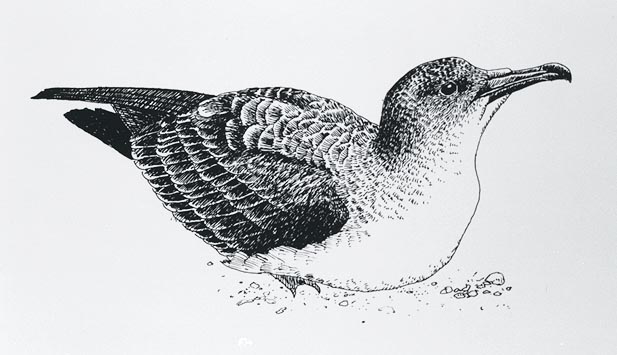
ober and November is fledging season for wedge-tailed shearwaters, when young birds fledge from burrows excavated into coastal cliffs to life at sea.  “Wedgies,” as they are affectionately called by wildlife biologists, are part of a mixed flock of seabirds that commercial fishermen rely upon to locate schools of ahi and other marketable fish. The uau kani, or wedge-tailed shearwater (Puffinus pacificus), is 17 inches in length from bill to tip of tail, with a wingspan of 38 inches. Adult birds leave coastal colonies at dawn to feed on fish and return after dark. Behavior while in these colonies is generally nocturnal and throughout the night birds emit weird moans, groans and loud screams, thus they are also nicknamed the “moaning bird.”

Wedge-tailed shearwaters nest on all the major and offshore islands in the Hawaiian chain by digging a burrow with their bill and feet or utilizing natural crevices: nesting sites are reused from year to year. The largest colony on Molokai lies hidden in the dunes of The Nature Conservancy’s (TNC) Mo`omomi Preserve. Discovered September 1999, by Arleone Dibben-Young and U.S. Fish and Wildlife’s Calvin Willis, the colony is now actively managed by TNC staff resulting in more than 400 young birds fledged per season. Egg laying begins mid-June, with one bright white egg forming the clutch. Parents share the 53-day incubation period, usually in stints of seven to ten days, and sometimes sit side-by-side. Chicks are fed fish once a day by regurgitation. Parents leave the nest site two to three weeks before their young have fledged (which takes about 100–115 days). Shearwaters are clumsy on land. Their legs are placed so far to the rear of the body that they cannot walk, so instead waddle. Young birds not yet capable of flight may wander from their burrows in search of food. At this time they are highly vulnerable to predators and often fall prey to mongoose, cats and dogs. Some young birds starve to death while waiting for their feathers to grow to flight length. Many fledglings are attracted at night by urban lights and fall into residential areas or onto highways where they are struck by automobiles. Caution should be used when driving at Kaunakakai Wharf as young birds fallen to the ground from exhaustion or striking harbor lights have been found numerous times on the roadway and parking lot.

Seabirds were held in high esteem by ancient Hawaiians: Birds returning at night to land were used to navigate home from sea, shifting weather was indicated by a change in behavior, feathers were made into capes, lei, and kahili for alii, and seabirds figured prominently in legends, proverbs and sayings.

Statewide community efforts assist in the recovery and release of several hundred juvenile seabirds annually. Chicks that have wandered too far from the nest and are not yet capable of flight must be briefly held in captivity by state and federal permitted wildlife rehabilitators. When ready for release, birds are fitted with a U.S. Geological Survey metal bird band. If you find a ‘downed’ seabird, call Arleone at 553-5992.

Lono’s Latest Inspirational Listening

Wednesday, October 19th, 2011

Lono’s Latest Inspirational Listening

Late afternoon light streams through the trees bathing Kalanianaole Hall with a soft glow. Standing near the stairway, the musician known as Lono stares skyward with slightly clasped hands held near his chest. From within his palms, a similar but intense light emanates and glows, as if mirroring that of the setting sun.

This is the album cover of Lono’s latest, “E Aloha E” – the sixth album in a series of Hawaiian music releases known as Old Style Hawaiian. True to the principals of the genre yet infused with Lono’s originality, “E Aloha E” is a no-brainer for fans of Hawaiian music.

For Lono followers, and those enraptured by Molokai, this album is essential – the continuation of an important journey in uncovering the spirit of Molokai and aloha. Most importantly, it is a living conduit to the ancestors of contemporary and historical Hawaiian culture, and the aumakua protectors of Molokai.

As is customary of Lono’s work, the album opens with the pahu drum beating like the slow rhythm of a heart. “Todd’s Work,” inspired by this writer, reflects Lono’s ability to traverse to the other side and translate it for the rest of us.

“Moku Kia Kahi,” or the “one-masted schooner,” has been performed by Hawaii greats including Gabby Pahinui, George Helm and Brothers Cazimero, among others. Here, Lono honors The Sunday Manoa; and anyone familiar with the group will recognize their influence on Lono’s work.

The theme of light shines in tracks “Ia 'Oe E Ka La,” a song honoring King David Kalakaua, and “Po Anuenue Keia,” meaning “the night rainbow” and composed for dancing hula.

Lono also pays respect throughout the album to prominent Molokai figures and people who have inspired and touched his work. “Ku`u Papale,” or “my beloved lauhala hat,” tributes Aina Keawe and was inspired by her sister, Molokai’s late aunty Ku`ulei Perez. “Please oh please, bring Ho`ailona home,” tells of Molokai’s most beloved monk seal, KP2, and was inspired by Loretta Ritte. Track nine, “Ua Nani Molokai,” reflects Lono’s reverence for Molokai and the beloved kupuna who have influenced the artist’s musical career.

Lono is known for his powerful message-filled music and continues to deliver with both classic folktales and important issues. “Kalaipahoa” reminds us to makaala the greed for Molokai’s aina while the fifth track tells of Bokikumanumanu, dog god and protector of Makanalua. Visible from the air and the Kalaupapa lighthouse, the Bokikumanumanu heiau (stone temple) is the only one of its kind in the world.  The song was inspired by kumu hula John Kaimiakaua.

The musicality is far from overpowered by his crooning vocals and strong stories. Pensive chanting, bird calls, flutes and ukulele plucking bring the olelo to life in tracks “Manu Mana`o” and “Hawai`i Pono `I,” (my only lament is that the former is not at lease a minute longer). Lono also enhances the album with two slack key tracks, “Hanaikapono” and “Nanaikapono.”

“Owl’s Lullabye” is inspired by storyteller Kindy Sproat originally by Stan Jones. It is the perfect closer of the album and one of my favorites from Lono.

While the light on the cover of his album might seem to come directly from Lono’s hands, he is in fact exposing and releasing a light that has always existed. In this, his sixth album of the Old Style series, Lono truly succeeds in bringing life to the ancestors of Hawaiian music and culture. Maika`i no – good job indeed!


Veterans Center Makes Progress

Wednesday, October 19th, 2011

Veterans Center Makes Progress

A solid foundation to the new Veterans Caring for Veterans center was laid last week as five truckloads of concrete were poured early Thursday morning at the wharf road site.  Plumbing has been completed and carpentry will begin in the next few weeks as the shipment of lumber also arrived last week.  The project is slated to be complete after the first of next year.

Kioea to Become Official Bird of Kaunakakai

Wednesday, October 19th, 2011

Community contributed by Arleone Dibben-Young

On Oct. 25, Maui Mayor Alan Arakawa and Council Chair Danny Mateo will sign a proclamation naming the kioea (Bristle-thighed Curlew, Numenius tahitiensis) the official bird of Kaunakakai. This makes Molokai the first district in the County of Maui to receive such distinction. The public is invited to the signing event, which will take place at 1 p.m. at the fourth grade classroom of Kaunakakai Elementary School, where this unusual shorebird whistles to students from the adjacent Duke Maliu Regional Park.

Middle School Students Excited to Get Spooky

Wednesday, October 19th, 2011

Community contributed by Kui Adolpho, Molokai Middle School

Halloween has evolved from our childhood days of dressing up as our favorite cartoon or movie character and going from home to home in our neighborhood to collect sweets. Although still a great part of the Halloween tradition, trick-or-treating has evolved to include an elaborate presentation of one’s home. There are intricate outdoor decorations, the do-it-yourself-ers who spend months planning ghoulish surprises and a multitude of choices in the delivery of candy to children. Haunted houses are becoming ever popular, and for the Halloween super-fans, a must.

Prevent Foodborne Illness

Wednesday, October 19th, 2011

Community contributed by the Molokai Oompa Loompas

National Feral Cat Day 2011

Wednesday, October 19th, 2011

National Feral Cat Day 2011

The Molokai Humane Society (MoHS) honored National Feral Cat Day (NFCD) Oct. 16, and will continue to do so throughout the year. NFCD is intended to create “compassion for cats coast to coast” through organizations in all 50 states that are committed to reminding people that Trap-Neuter-Return (TNR) and other humane programs for feral cats are in the best interest of the cats and the community.

“Feral cats are members of the domestic cat species, but are not socialized to humans and therefore they cannot be adopted into homes. They typically live outdoors in family groups called colonies,” said Jenn Whitted, MoHS executive director. “Trap-Neuter-Return is an effective and humane way to stabilize the feral cat populations, because it ends the breeding cycle and stops behaviors associated with mating.”

NFCD was launched in 2001 by Alley Cat Allies, the national advocate for feral and stray cats and a recognized authority on TNR, a program in which cats who live outdoors are humanely trapped and brought to a veterinarian to be evaluated, spayed or neutered and vaccinated. While under anesthesia a small notch is made in the ear for identification; this procedure is known as ear clipping. Friendly cats and kittens are made available for adoption.

“We applaud the Molokai Humane Society for its work to educate their neighbors about the benefits of programs that rely on Trap-Neuter-Return and the use of humane deterrents to ensure that people and outdoor cats get along peacefully,” said Becky Robinson, president of Alley Cat Allies.

Help Molokai get its feral cat population under control by participating in the MoHS low cost spay and neuter program, which provides spay or neuters to cats for only $20 each. We also offer a billing option for people who are unable to pay at the time of service. Call to make an appointment to bring in your neighborhood feral cats today!

Left is a picture of “Lucky.” He was found in a wall in Kaunakakai and has since been neutered and vaccinated. Lucky is looking for his forever home, if you are interested in adopting Lucky or any of the other cats currently in foster homes, please give us a call. We are also looking for people who are interested in fostering animals until they are adopted. 

For more information about National Feral Cat day, see alleycat.org/NFCD.

For more information about MoHS, visit molokaihumanesociety.org and keep an eye out as we begin to develop an organized TNR program for the island in the first part of 2012. We will be looking for volunteers to manage the various colonies around the island. For more information, call us at 558-0000 or email us at molokaihumanesociety@gmail.com.

Aunty’s Corner

Wednesday, October 19th, 2011

Aloha aunty here…once again I had to go to the big city. There were so many people coming to Molokai on Friday evening that I had to spend time with my niece and her family, a great place to stay!

Blue Gold Film Screening

Wednesday, October 19th, 2011

Sust`AINAble Molokai News Release

Join Sust`AINAble Molokai on Saturday, Oct. 23 for a free screening of the award-winning film “Blue Gold: World Water Wars.” Based on the ground-breaking book by Maude Barlow and Tony Clark, the film sheds light on the world’s rapidly approaching water crisis and suggests that wars of the future will be fought over water as they are today over oil. Teri Waros will host the event at Kalele Bookstore beginning at 6:30 p.m. See you there!