Nation-Building Process

Wednesday, April 30th, 2014

Nation-Building Process

Community Contributed

Opinion by Kamana`opono M. Crabbe, Ka Pouhana, Chief Executive Officer for OHA


With the May 1 deadline to register with the Official Hawaiian Roll fast approaching, the Office of Hawaiian Affairs (OHA) is moving aggressively to engage its beneficiaries on Molokai in the nation-building process.

We are invigorated by those in the Hawaiian community who tell us that they are ready to begin a process aimed at creating a nation where all Native Hawaiians have an opportunity to thrive.

This nation-building process will begin and end with Native Hawaiians who, for example, believe their children are entitled to an education that allows them to be competitive in the 21st century; believe their families should have access to safe and affordable housing that strengthens communities; and believe we as a people need to become healthier by stepping it up through exercise, a balanced diet and preventive medicine.…

Honoring Hawaii’s First Homestead

Wednesday, April 30th, 2014

Honoring Hawaii’s First Homestead

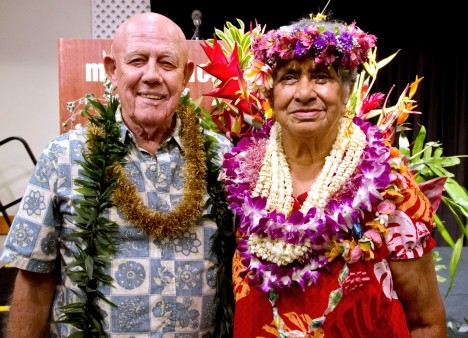
Beginning in 1921, a selected group of hardy Hawaiian families began building a life in Kalama`ula. They cleared kiawe, constructed homes and infrastructure, planted gardens and raised livestock. It was difficult work, but because of their success, more than 6,000 Hawaiian Homesteaders now live around the state, according to OHA Chairperson Colette Machado.

“They had to make do and… they overcame that and succeeded,” said Machado. “If it wasn’t for the Kalama`ula demonstration, [Native Hawaiians] wouldn’t be where we are today.”

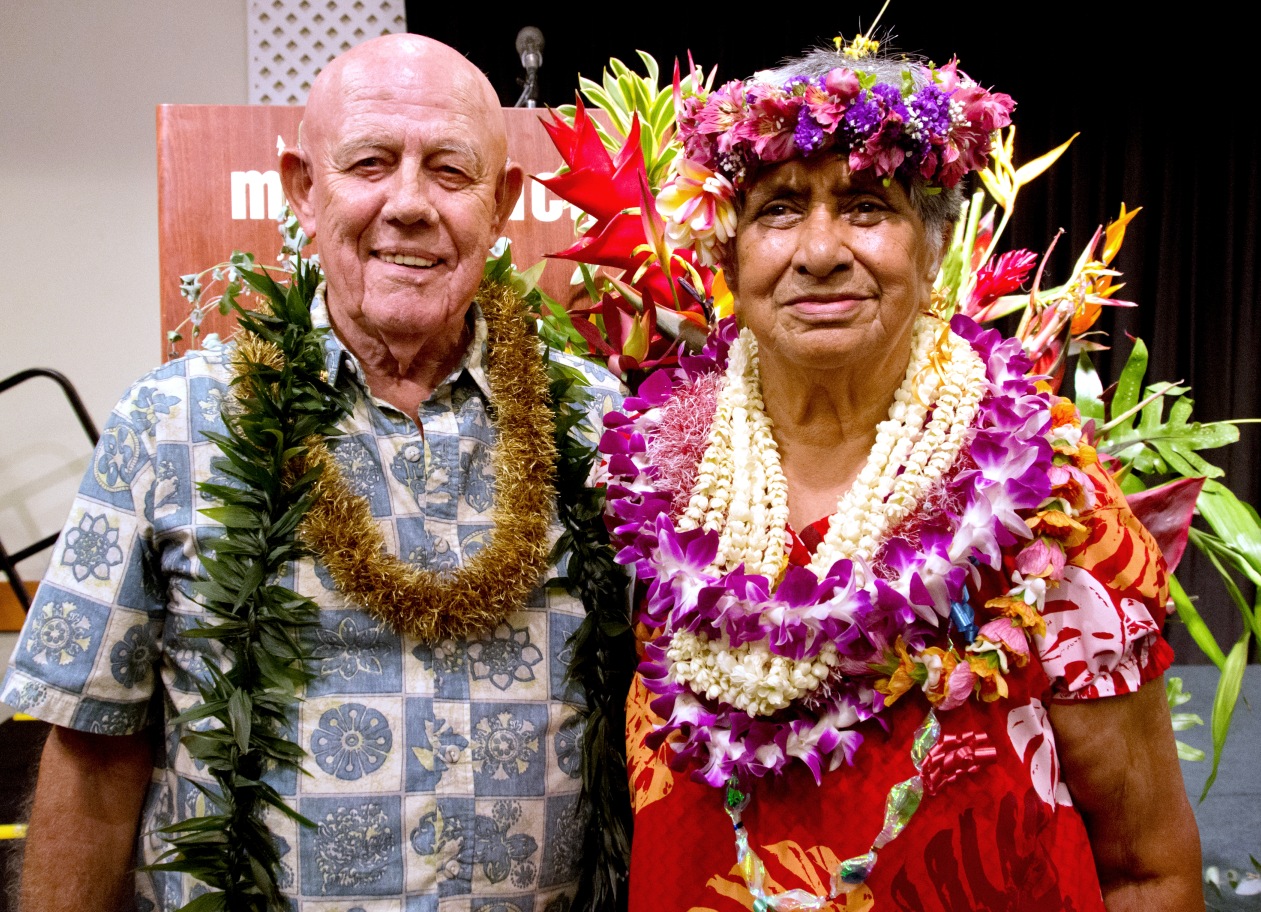
Last week, the descendants of Hawaii’s first 42 homesteaders in Kalama`ula gathered to celebrate 90 years since the establishment of the Kalaniana`ole Settlement, as it was known.…

Sharing the Love of Music

Wednesday, April 30th, 2014

Sharing the Love of Music

Inside the white brick walls of Kaunakakai Elementary School room A-103, the reverberation of melodies fill the air after school Mondays and Wednesdays as keiki, parents and community members tackle playing some of the toughest string instruments to learn.

The students are a part of the Molokai Community Band and the 21st Century Instrumental Music program, an after-school music program for individuals of all ages to receive group music lessons and learn a string or woodwind instrument. The focus is learning how to read music, play an instrument and interact with others in a group environment, said Bob Underwood, a first grade teacher at Kaunakakai Elementary and volunteer string instrument teacher.…

Taking Your Meds the Right Way

Monday, April 28th, 2014

Community Contributed

By Jon Mikami, RPh, and Kelly Go, RPh, Molokai Drugs, Inc.

Medications can make a world of difference—if you take them the right way. Half the time, though, this doesn’t happen, at least when it comes to drugs doctors prescribe for chronic conditions.

Sometimes people miss doses. Or they might stop refilling the prescription or never get it filled in the first place. Why does this happen? Costs or side effects of drugs can be an issue. Also, complex dosing schedules or multiple drugs can be really confusing.

The problem is not taking medications the right way can threaten your health, increase complications, and lower your quality of life.…

Molokai and Lanai High Athletics Fundraiser a Homerun

Monday, April 28th, 2014

Downtown Athletic Club Hawaii News Release

The Downtown Athletic Club Hawaii’s (DACH) second annual benefit fundraiser, “Cheers for Molokai and Lanai High,” held on Jan. 29 outside Murphy’s Bar and Grill, raised $131,500 to benefit student athletes from both schools, and donations are still coming in.

DACH Board of Directors President Keith Amemiya said the outpouring of support from across the state was emotional and overwhelming. Of the proceeds, $85,500 went to Molokai High and $46,000 will benefit Lanai High’s athletic program.

DACH arrived at the financial allocation with the agreement of Molokai High and Lanai High athletic administrators based on the respective numbers of student-athletes served and certain donations that were earmarked by sponsors.…

Collard Greens

Monday, April 28th, 2014

Community Contributed

By Glenn I. Teves, County Extension Agent, UH CTAHR

On Molokai, the summer heat can overwhelm many of the vegetables that grow well in the winter. Collards or collard greens can grow at a time of the year when local greens struggle and are in short supply. A primitive member of the cabbage family, it belongs to the “Acephala” group meaning “cabbages without a head.”

Collard is a corrupted term from the word “colewort” meaning “wild cabbage plant.” Native to the southern Mediterranean in an area called Asia Minor, a part of Turkey, it was carried in all directions and is popular in Portugal and Spain to the west, Bosnia, Montenegro, Croatia and Serbia to the east, and African and India to the south.…

Molokai Fitness: Nutrition Tips

Monday, April 28th, 2014

Community Contributed

By Ayda Ersoy

We’ve talked already about how important exercise is. This week we’re going to take a little break from discussing exercise, and go back to nutrition.

Why is nutrition so important? Because you become what you eat. But why is it so hard to control what you eat? Because you have got in the habit of eating the way you do. So, you need to create a new habit. Your habits control most of what you do, and if you can create a habit to eat more healthfully then you will do it. It is not about following a diet, because no matter how strict you are, if you just see it as a temporary diet then it won’t have a long lasting effect.…

Free Disaster Preparedness Classes on Molokai

Monday, April 28th, 2014

Free Disaster Preparedness Classes on Molokai

Maui Civil Defense Agency News Release

Following a major disaster, the number and scope of emergencies increases dramatically, and first responders who provide fire and medical services may not be able to meet the immediate needs in all areas. Factors such as number of victims, communication failures and road blockages will prevent people from accessing emergency services. People will have to rely on each other for help in order to meet their immediate life saving and life sustaining needs. To help prepare for such emergencies, training is available, which will be provided on Molokai through a series of free classes.

During disasters, family members, fellow employees and neighbors will spontaneously try to help each other.…

Molokai Food Hub Project

Sunday, April 27th, 2014

Sust`ainable Molokai News Release

Have you ever gone to the grocery store and wished that more locally grown food was available? Here at Sust`ainable Molokai, we have, and we know that many of you have as well. Based on the Agricultural Needs Assessment survey that we conducted in 2012, 90 percent of those Molokai residents surveyed said that they prefer to buy local Molokai food products, and 98 percent answered, “Yes, I would eat more local food if it was available.”

In response to that demand, along with the input of our island farmers, which was also collected during our Agricultural Needs Assessment process, we are now working to establish a Molokai Food Hub.…

Molokai Student Winners at State History Day

Saturday, April 26th, 2014

Hawaii Council for the Humanities News Release

On April 12, Molokai students presented projects that placed and earned History Day medals, as well as garnered special state awards and prizes from Hawaii organizations at the 2014 Hawaii History Day State Fair. The annual competition involves hundreds of students and teachers from the islands of Hawaii, Kauai, Maui, Molokai and Oahu. Hawaii Council for the Humanities again sponsored the state competition, the theme of which is Rights and Responsibilities in History.

Molokai High School student Cendall Manley won a bronze medal for her Senior Performance project titled “Prohibition: A Dilemma Between Individual Rights, Personal Responsibility and Governmental Power” and is a qualifier for the 2014 Kenneth E.…