



Native Plant Spotlight from Kamalō: ʻAʻaliʻi
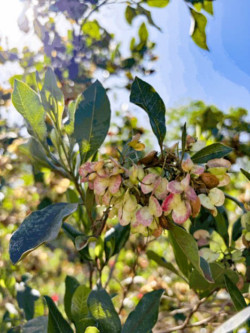
‘A’ali’i can grow in challenging environments. Contributed photo
By Ka Ipu Makani
Ka Ipu Makani Cultural Heritage Center is excited to begin sharing a new series highlighting the native plants being grown and prepared for planting at ʻAikoʻolua in Kamalō as part of the Kīpuka Kamalō Restoration Project. The work on the ground is led by ʻAnakala Bobby Alcain, who has spent many years working with native plants and sharing knowledge about their propagation and care in dryland environments.
Over the coming months, this series will introduce some of the native species being propagated for the project and share a bit about their ecological roles, cultural uses, and significance in Hawaiian traditions.
This week’s plant: ʻAʻaliʻi (Dodonaea viscosa)
ʻAʻaliʻi is one of the most adaptable native plants in Hawaiʻi and is known for its ability to grow in challenging environments. It can be found across a range of landscapes, from coastal areas to dryland forests and upland slopes. The plant is easily recognized by its clusters of papery winged seed pods, which can range in color from pale green to vibrant shades of red.
In dryland environments, ʻaʻaliʻi plays an important role in helping stabilize soil and protect the land from erosion. Its ability to withstand strong winds and drought conditions makes it well suited for rugged landscapes where other plants may struggle to take hold.
For ʻAnakala Bobby, plants like ʻaʻaliʻi are not simply additions to the landscape. They are part of the living relationships that shape the ʻāina.
“Aʻaʻaliʻi is not a new introduction,” he explains. “It is a relative returning home. We’re not changing the course of the land. We’re just enhancing it.”
For generations, people found many practical uses for ʻaʻaliʻi. The plant’s hard wood was used to make tools, farming implements, and light fishing spears. Seeds could be boiled to produce a red dye, and the leaves and fruits were commonly used in lei making. Crushed leaves were sometimes applied to help soothe skin irritations, while the flowers could be used as a mild tonic.
ʻAʻaliʻi is also closely associated with resilience and strength. An ʻōlelo noʻeau reflects this enduring quality:
He ʻaʻaliʻi kū makani mai au; ʻaʻohe makani nāna e kulaʻi. — “I am a wind resisting ʻaʻaliʻi; no gale can push me over.”
Through the work happening at ʻAikoʻolua, plants like ʻaʻaliʻi are being propagated and prepared for planting, helping strengthen the landscape while creating opportunities for the community to learn more about native plants and the knowledge surrounding their care.
Community members interested in learning more, supporting the project, or participating in future workdays are encouraged to contact Aulani Herrod-Perkins at aulani@kaipumakanichc.org.

 Add your comment


Don't have a Molokai Dispatch ID?
Sign up is easy. Sign up now
You must login to post a comment.
Lost Password