



Hula Panel and Exhibit at Mitchell Pauole Center
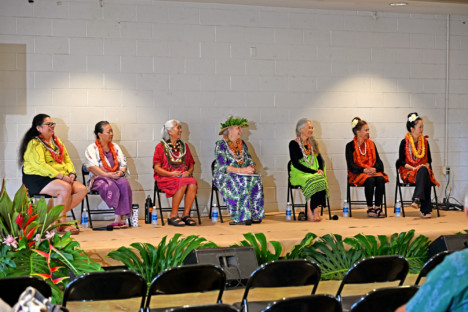 This year’s Kā Molokai Makahiki had a special event, a hula panel and exhibit at Mitchell Pauole Center Jan. 24 from 9 a.m. to 12 p.m. The event honored Molokai’s hula lineages and the role of hula in the Makahiki tradition.
“We are reintroducing the hula aspect into our Makahiki traditions because of Lono,” Lima said of the Hawaiian god of fertility, abundance, agriculture and peace. “When Lono brings the rains, he activates the forest, and when the forest is activated and moves, that is what inspired our people to dance, to tell those stories that way.”
The seven panelists — Debbie Naeʻole, Bridget Mowat, Loretta Ritte, Teri Neuhart, Kahiwa Chow, Karen Harada and Uakea Weisbarth-Tafaoimalo — were students of kumu hula Rachel Kamakana, Harriet Ne, John Kaʻimikaua, Kauwila Reyes and Moana Dudoit.
The panelists shared with about 100 people the legacy of those iconic kumu hula who have already passed away.
The panel discussed their experiences and the significance of hula, emphasizing its deep cultural roots and the importance of discipline, respect and tradition. They shared personal stories about their kumu, highlighting the strict yet nurturing guidance they received.
The panelists stressed the importance of mastering basic hula fundamentals such as footwork, maintaining cultural practices, and the evolving nature of hula. They also touched on the challenges of keeping hula alive, particularly among younger generations, and the need to preserve and pass on hula traditions.
“Auntie Rachel (Kamakana), you just love her or you don’t like her,” Mowat said, causing the audience to erupt in laughter. “She was strict, and we were young, but she was serious, and hula was serious. Her famous words was, ʻCommitment, if you’re not going to commit, then you have no business here.’”
Naeʻole said Kamakana taught many things to her students, took them to many places and introduced them to several kumu hula.
Harada said Ne took her, an “awkward, clumsy, tone-deaf bookworm” six-year-old child, and got her to dance “fairly decently” after many years.
“We had no lazy elbows; we always had to have our arms up and stand up tall. And no gum, no gum during practice, no gum during dancing,” Harada said. “I can hear her and see her when I see other people dancing and I see gum.”
Chow learned from Reyes when the kumu hula was already retired but kept teaching to a small group.
“She was a very kind and loving, firm kumu hula,” Chow said. “She gave us a lot of lessons about discipline. You show up, put your best foot forward. Be prepared.”
Neuhart said Dudoit took her students everywhere; Germany, Japan, Tahiti and the mainland.
“She just exuded energy and she always had this smile on her face,” Neuhart said of Dudoit. “She said, ʻSmile, even if you make a mistake on stage, keep smiling. Nobody is going to know that you made a mistake if you’re still smiling.”
The discussion concluded with a call to action to continue fostering hula and its connection to Hawaiian cultural tradition.

 Add your comment


Don't have a Molokai Dispatch ID?
Sign up is easy. Sign up now
You must login to post a comment.
Lost Password