



Go Slow, Whales Below
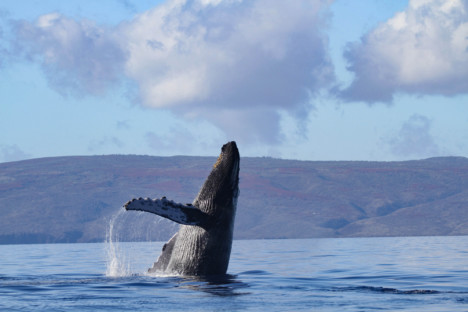
Government officials are reminding boaters to follow the law and avoid collisions with humpback whales. Photo courtesy of DLNR
By The Molokai Dispatch staff
Each winter, more than 10,000 humpback whales migrate from the frigid Alaskan waters to the warmer, tropical waters surrounding the Hawaiian Islands. Once here, they breed, nurse their calves and raise their young before returning to the North Pacific.
“As koholā, or humpback whale, season reaches its peak in Hawaiʻi, the Go Slow – Whales Below initiative urges mariners to be mindful and exercise caution when out on the ocean, for the safety of the whales and everyone on the water,” the state Department of Land and Natural Resources states in a recent news release.
Most of the koholā migrations are between December and April, but there are whale sightings as early as October. Each whale will spend anywhere between two-to-six weeks in Hawaiian waters before returning up north, where most of their food source is. Most whales are gone by April, but a few stay until early May.
The peak of whale season — when the highest number of whales are in Hawaii — is January through March. This is when most collisions between boats and whales are prone to occur, damaging vessels and hurting members of this protected species.
“Recently a humpback whale calf was photographed off Oʻahu’s west coast with a large gash across its back. Based on signs of healing, the injury likely occurred from a vessel strike in Hawaiian waters,” the DLNR news release states.
The Go Slow — Whales Below initiative, aimed at creating awareness about potential collisions, reminds vessel operators that by law they must travel at speeds of 15 knots or less in waters 600-feet-deep or less. They also must reduce their speed to six knots or less when approaching or departing whales within 400 yards, and never approach, by any means (from standup paddleboards to motorized vessels) within 100 yards of a humpback whale.
“The public is prohibited from harassing, harming, pursuing, wounding, killing, capturing, or collecting marine species protected by the Endangered Species Act and Marine Mammal Protection Act. NOAA urges members of the public to observe marine animals from a safe and respectful distance, and do not approach or touch them,” the National Oceanic and Atmospheric Administration states on its marine life viewing guidelines posted on their website.
DLNR also advises both boaters and ocean users to be on the lookout for whales, especially curious calves, which may surface unexpectedly, are difficult to see and spend more time at the surface.
“Due to less experience, calves are less likely to avoid approaching vessels. Remaining vigilant and slowing down can help prevent collisions that could injure or kill whales, or damage vessels and harm people,” the release states.
The DLNR encourages anyone who may encounter a whale that appears to have been struck by a vessel, is entangled or distressed to maintain a distance of at least 100 yards, and call NOAA Fisheries 24/7 Marine Wildlife Response Hotline at (888) 256-9840. If unable to call, people should contact the U.S. Coast Guard on VHF Channel 16, as it will relay the report, according to DLNR.
“Individuals should not attempt to swim with, approach or disentangle a whale – it is illegal. Even well-intentioned actions are extremely dangerous for both humans and whales. Humpbacks can weigh more than 40 tons and people attempting to free animals without proper training and equipment have been seriously injured or killed,” as reported by DLNR.
Rapid and accurate reporting is the best way the community can help compromised whales, according to DLNR.
The Go Slow — Whales Below initiative is a cooperative effort between DLNR’s Divisions of Aquatic Resources, DLNR’s Boating and Ocean Recreation, the NOAA’s Hawaiian Islands Humpback Whale National Marine Sanctuary and the Pacific Whale Foundation.
Visit dlnr.hawaii.gov/dobor/boating-with-whales/ for more information.

 Add your comment


Don't have a Molokai Dispatch ID?
Sign up is easy. Sign up now
You must login to post a comment.
Lost Password