



Coastal Kuleana at Moʻomomi Beach
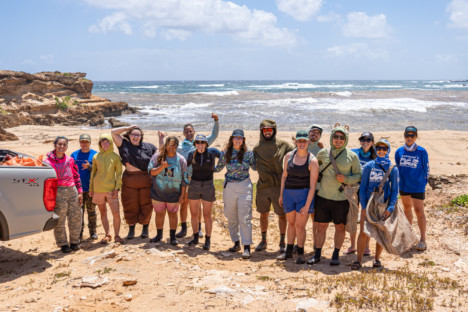
A group of representatives from Department of Land and Natural Resources, The Nature Conservancy, Sust’ainable Molokai and the University of Michigan conducted a beach clean-up at Mo’omomi Beach on June 5. Photo courtesy of Sust’ainable Molokai
By Dayanti Karunaratne | Editor
A group of about 20 representatives from various local and national organizations joined forces for a clean-up at Moʻomomi Beach on June 5th in celebration of Makahiki Kuleana Kahakai: the Year of Our Coastal Kuleana.
The Year of our Coastal Kuleana is a state-wide Department of Land and Natural Resources initiative that encourages people to learn about shorelines and play a part in their protection. Across the state, community groups have been organizing restoration projects, hauling away both litter and invasive plants that threaten these ecosystems. Many took place this weekend in recognition of World Ocean Day on June 8th.
“We picked up about one ton of marine debris,” The Nature Conservancy (TNC) Program Director Allyson Durkin said. Her organization, along with the DLNR, Sustʻainable Molokai and the University of Michigan, took part in the recent clean-up. “We’re going to leave it in our baseyard here until Sustainable Coastlines Hawaii comes. They take it to Oahu and they actually sort it,” she explained. Sustainable Coastlines Hawaii is an environmental non-profit, protecting coastlines through community-driven beach clean-ups.
Here on Molokai, due to poor road conditions, the Kawaʻaloa shoreline clean-up was limited to project partners and a group of students from the University of Michigan, who are working with the Molokai Heritage Trust.
Durkin said that marine debris is human-generated rubbish that is brought ashore by tides. In the past, TNC has found garbage left behind by people camping and cooking in the area, but they did not find any of that kind of garbage this time, she said.
Her organization has monitored the turtle populations in the Moʻomomi area for years. According to its officials, marine debris threatens the survival of turtle hatchlings. Garbage can block their route back to the sea, making them more susceptible to predators, and exposing them to heat stress due to prolonged time spent on land. Also, fishing line can get caught in their flippers.
Russell Kallstrom, Project Director with TNC, said the public can help protect turtle nesting habitats by not driving on the beach, turning off all lights at night and picking up marine debris when they see it.
The Moʻomomi clean-up that was scheduled in March had to be cancelled due to the Kona Low storm, but it has been rescheduled to August 1st, and the community is invited to take part. Visit www.sustainablecoastlineshawaii.org to find out more.

 Add your comment


Don't have a Molokai Dispatch ID?
Sign up is easy. Sign up now
You must login to post a comment.
Lost Password