Environment

News stories regarding Molokai’s outdoor environment

Collard Greens

Wednesday, May 21st, 2014

Collard Greens

Community Contributed

By Glenn I. Teves, County Extension Agent, UH CTAHR

On Molokai, the summer heat can overwhelm many of the vegetables that grow well in the winter. Collards or collard greens can grow at a time of the year when local greens struggle and are in short supply. A primitive member of the cabbage family, it belongs to the “Acephala” group meaning “cabbages without a head.”

Collard is a corrupted term from the word “colewort” meaning “wild cabbage plant.” Native to the southern Mediterranean in an area called Asia Minor, a part of Turkey, it was carried in all directions and is popular in Portugal and Spain to the west, Bosnia, Montenegro, Croatia and Serbia to the east, and African and India to the south.…

No Child Left Inside

Wednesday, May 21st, 2014

No Child Left Inside

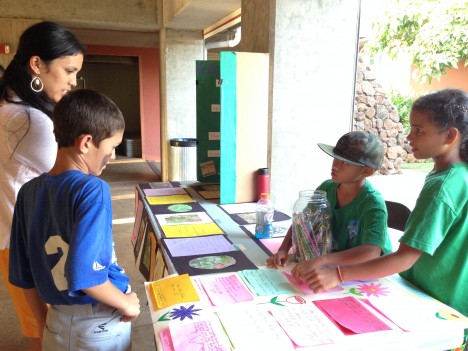
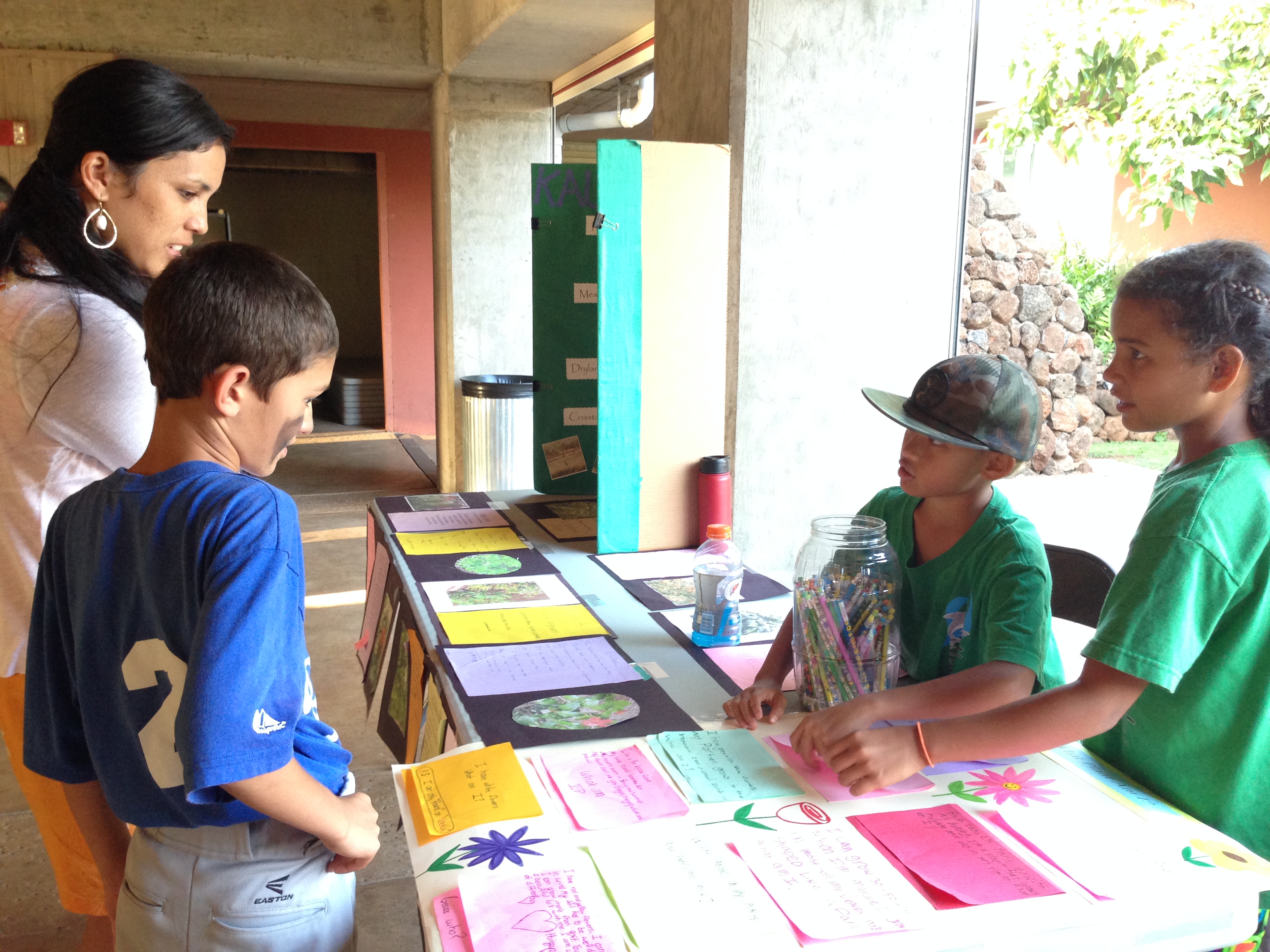
Turning litter from Mo’omomi into beautiful art, testing Kalama`ula waters for salinity and soil for pH levels and quizzing curious minds on the Kaunakakai Ahupua`a, students shared their research at the Molokai Digital Bus (MDB) capstone Ho`ike.

Students soaked in science, technology, engineering and math (STEM) research at the fourth annual capstone last Wednesday at Kulana `Oiwi.

About 250 students collected, weighed and sorted data to showcase as part of the MDB Molokai Ho`ike project, a yearlong program that takes students out in the field in a mobile laboratory to experiment. Approximately 75 of those students came to the event to aid their kumu in presenting baseline research to other students, teachers and their ohana.…

Birds for Bishop Museum

Sunday, May 18th, 2014

Birds for Bishop Museum

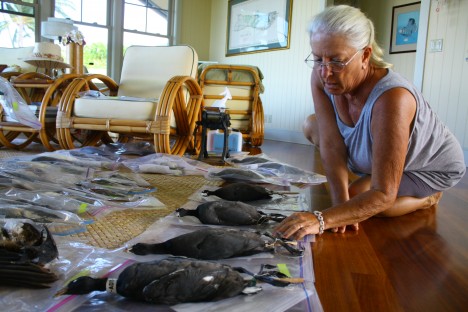
Hawaii’s native bird population is in peril, with 23 birds already extinct and more than 30 of the state’s avian species in danger of becoming extinct, according to a federal report.

However, fossil and sub-fossil discoveries and collections of specimens are providing a wealth of information that may save the birds. The first fossil findings took place on Molokai over 40 years ago, putting the island at the forefront of action and bringing in notable inquisitive scientists.

“It took millions of years for these birds to come to Hawaii and evolve into amazing species and once they’re gone, they’re gone,” said Molly Hagemann, the Bishop Museum’s vertebrate zoology collection manager.…

Monk Seal Births, Recovery Plan

Wednesday, May 14th, 2014

Monk Seal Births, Recovery Plan

By Laura Pilz and Catherine Cluett

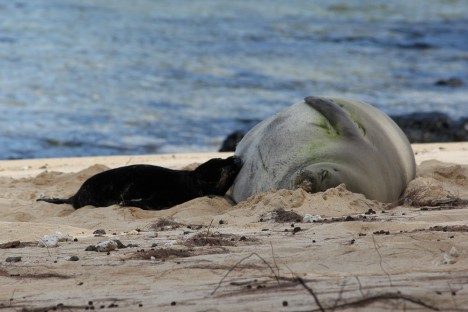
Even though youth of the human species aren’t permitted in Kalaupapa, babies of the Hawaiian Monk Seal persuasion are welcomed.  The peninsula has become one of the most popular spots for endangered monk seal births, with two so far this year.

According to Diane Pike, Molokai Response Coordinator for the Monk Seal Foundation, almost all of the monk seal births on Molokai occur in Kalaupapa. “Last year, we had 10 pups,” said Pike, “and all of them were born in Kalaupapa.”

Through tracking efforts, scientists have found that those females who come to give birth in Kalaupapa are not necessarily Molokai seals.…

Helping Out at Koheo Wetlands

Wednesday, May 14th, 2014

Helping Out at Koheo Wetlands

Community Contributed

By Kumu Loke Han, Kula Kaiapuni o Kualapu`u

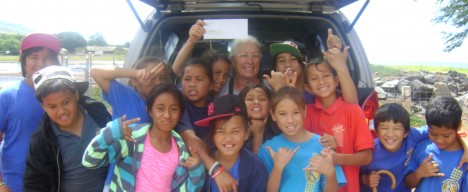
Students from Kumu Loke Han¢s fourth grade Hawaiian Language Immersion class at Kula Kaiapuni o Kualapu`u are learning valuable lessons in kokua and laulima.

Back in November, the students visited Koheo wetlands in Kaunakakai as part of their studies on the `ahupua`a land system. They learned that wetlands are a vital component to the healthy ecosystem of our island. They learned about native plants and animals that help to sustain our native bird population. They also learned about invasive plants and animals and how destructive these introduced species can really be.…

World-Renowned Biology Prof to Speak on Pesticides

Thursday, May 8th, 2014

Hawaii SEED News Release

A state-wide speaking tour of world-renowned University of California Berkeley Professor of Integrative Biology Dr. Tyrone Hayes will include Molokai on May 16. Paul Towers from Pesticide Action Network will be speaking as well, presenting an overview of pesticide use nationally and internationally and the significant role that Hawaii plays as ground zero for open-air pesticide experimentation.

The Molokai event will be held on Friday, May 16 at 6 p.m. at the Molokai Community Health Center. Other special guests will include Lorrin Pang, M.D. of the Hawaii Department of Health and Jeri Di Pietro, president of Hawaii SEED.…

Plant a Tree of Life, Grow Ulu

Thursday, May 8th, 2014

Community Contributed 

By Glenn I. Teves, County Extension Agent, UH CTAHR

In commemoration of Love a Tree Day, May 16, we will hold a special workshop entitled Plant a Tree of Life, Grow Ulu. It will be held on Friday, May 16 from 3 to 6 p.m. at University of Hawaii Maui College – Molokai Farm in the Molokai Agricultural Park.

There will be three presentations on Breadfruit:

“All About Breadfruit” by Dr. Diane Ragone, Director of the Breadfruit Institute at the National Tropical Botanical Garden (NTBG) at Kalaheo, Kauai “Caring for Your Tree,” Harvest & Post Harvest by Ian Cole, Breadfruit Institute Collection Manager, NTBG, Kahanu Gardens, Hana, Maui “Some Like It Sweet – Cooking Demonstration” by John Cadman, Pono Pies, Maui

This workshop is also in celebration of the 100th Anniversary of the Cooperative Extension Service this year.…

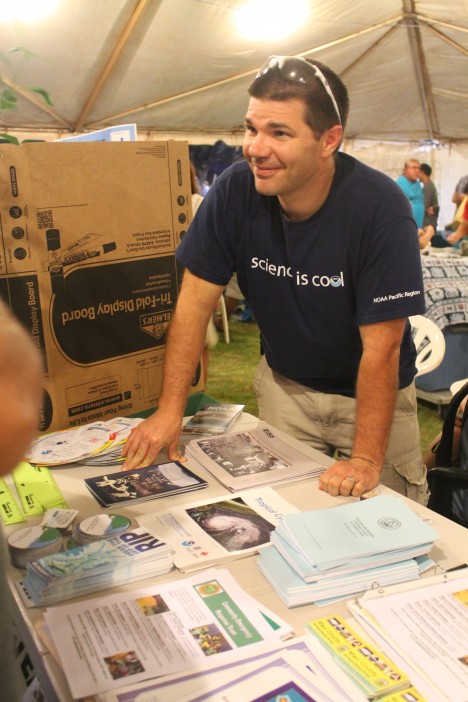
Be Hurricane Ready

Thursday, May 8th, 2014

Be Hurricane Ready

Based on statistics, this year’s hurricane season beginning in June brings extra cause to be well-prepared for the worst, according to weather experts. 2014 is an El Nino year, said Mike Cantin of the National Weather Service, Central Pacific Hurricane Center in Honolulu. El Nino conditions are caused by abnormally warm water near the equator, where hurricanes typically form, and that — statistically speaking — brings a greater likelihood of tropical cyclones, according to Cantin.

“You have a whole generation of people who grew up on Molokai who have never experienced a hurricane and have no idea what it is,” explained Cantin on a trip to Molokai last month.…

Protect Your Home From Brush Fire

Wednesday, May 7th, 2014

Protect Your Home From Brush Fire

Community Contributed

By Denise Laitinen

Because the top three causes of brush fire in Hawaii are human-caused — arson, fireworks and human error — it’s crucial that folks do what they can to protect their property from brush fires. Fortunately, the national Firewise Communities program offers free and easy suggestions Molokai residents can take to reduce their risk to brush fire. With Molokai’s history of large brushfires, and recent case of intentionally-set fires in Kalama`ula, it is especially important to always be ready to protect your property from fire.

“Firewise teaches people how to prepare for a fire before it occurs,” said Denise Laitinen, the Hawaii Firewise Communities Coordinator.…

Green Guerillas Visit Food Forest and MMS

Thursday, May 1st, 2014

Molokai Seed Savers News Release

A hardy group of Green Guerillas (Seed Savers over age 65) braved the rain and winds for a tour of the Sustainable Molokai Food Forest under the direction of Fred Richardson. Fred explained the design of the forest, the water flow and catchment, terracing, plantings, composting and future goals. An area of land that had been left without management where the soil was running off onto a road at the bottom of the hill has been turned into a beautiful forest with hard wood trees, fruit trees, construction grade bamboo and vegetables. A community work day is held the fourth Saturday of every month and seeds, cuttings and plants are available as they are produced in the forest.…