Environment

News stories regarding Molokai’s outdoor environment

Mo`omomi Meandering

Thursday, March 18th, 2010

Mo`omomi Meandering

By Maluhia Mendes-Medeiros, with Kealakai Alcon
From a series by O Hina I Ka Malama (Molokai High School Hawaiian immersion students) which focuses on place-based scientific inquiry.

Welina mai me ke aloha e na makamaka ‘o Molokai nei. ‘O Maluhia Mendes-Medeiros ko’u inoa. A ‘o Kealakai Alcon ko’u hoa pakana. I keia makahiki pili ko maua pahana ‘epekema I ka ‘aina ‘o Mo`omomi.

Aloha, my name is Maluhia Mendes-Medeiros. With my partner Kealakai Alcon, we focused our project this year on Mo`omomi.

First quarter we did a project, based upon the limu of Mo`omomi. We were required to create a booklet, model, and power point. We had the privilege of taking a field trip to Mo’omomi to gather specimens for our research.

On our field trip we learned that there are many different species of limu all over our island. We observed how we are losing some native limu and gaining invasives.

We have to keep in mind that we should only take what we need, and preserve for our future generations. The removal of invasive limu is an advantage, because it creates a less stressful environment allowing native limu to re-generate and re-populate.

Limu is one of the main food sources for our native fish. Without limu the life cycle of the oceans ecosystem diminish, and native species as well as many others would die off. It is very important to preserve our limu of Hawaii.

Our second quarter project focused on invertebrates of Mo`omomi. On a return visit we observed invertebrates found along the shoreline and collected specimens such as Sea Cucumbers, Wana, and ‘Opihi. In school we dissected them to observe and study their body parts. Overall this quarter we learned about invertebrate diets, habitats, purposes, and uses.

On a third trip to Mo`omomi we studied fish, so we went diving and saw them in their own habitat. We also observed tide pool fish and gathered some of them to bring back to our classroom aquarium.

We enjoy place-based learning because it allows us to be better involved and engaged in the task at hand. Place based learning allows for hands-on activities providing a more fun learning environment for students, and we learn about our culture and develop Hawaiian skills that our kupuna use. Throughout these trips we learned skills that can help us in our future.

We would like to say mahalo to Mac Poepoe, Mervin Dudoit, and The Hui Malama O Mo’omomi for the transportation and access to the facilities.

Mahalo nui loa no ka ho’olohe ana mai. I na he ninau kau, mai hilahila e noe aku. Mai na Haumana ame na Kumu ‘o ‘O Hina I Ka Malama.

Eco-Students Ignite Action

Thursday, March 18th, 2010

Eco-Students Ignite Action

Nothing breaks up a monotonous school year better than a field trip. In the name of science and sustainability, Aka`ula School makes it their business to provide students with three such trips. Their PRISM program provides “real life application” to environmental issues, inspiring kids to tackle a range of issues from illegal hunting to carrying on Hawaiian sailing traditions.

“Kids this age are always told they can’t – can’t drive, can’t vote,” said Dara Lukonen, coordinator for PRISM. “They have a strong sense of social justice that we need to capitalize [on].”


Another part of the symposium is a keynote speaker – a community member who has done their own work in an environmental field for Molokai. This year Penny Martin spoke about her experience sailing in the Hokule`a, a full-scale replica of a Polynesian voyaging canoe, in 1976. She said she discovered how much the ancient Polynesians and Hawaiians knew about nature – stars, tides, botany – and how it helped them sail from Oceanic islands to the Hawaiian islands over a thousand years ago.

“Everything you need is here,” she explained. “If you take care of the land, it takes care of you.”

Molokai Fishers Register Laynets, Bottomfish Rules

Monday, March 15th, 2010

Department of Land and Natural Resources News Release

Lanai and Molokai fishers can register their laynets with staff of the Department of Land and Natural Resources Aquatic (DLNR) Resources Division, who will be on island this month for scheduled public hearings on proposed amendments to bottomfish rules.

The Division of Aquatic Resources (DAR) staff will also be available to answer any questions or concerns about various marine resource management issues, such as regulated species rule changes, and will be able to issue commercial fishing licenses or information on DAR’s new onlline commercial fish catch reporting system using the Internet. 

Meth Charges Plague Kalaupapa

Monday, March 15th, 2010

Meth Charges Plague Kalaupapa

While Kalaupapa patient Norbert Palea awaits a verdict for his Feb. 26 arrest for intent to distribute crystal methamphetamine, the settlement has been advised to treat him as it did prior to the allegations.

“He is innocent until proven guilty,” said Mark Miller, Kalaupapa Department of Health (DOH) administrator. In a community meeting on March 9, he informed the patient residents and state workers that Palea “shouldn’t be treated any differently.”

Palea, 68, was released Thursday, March 4 and arrived back at the peninsula the following day, Miller said. He was released on $25,000 bail.

Palea is Kalaupapa’s youngest patient, and was arrested at the Honolulu International Airport nearly three weeks ago while on a medical visit. He was allegedly attempting to ship 18 grams of methamphetamine in several Ziploc bags.

His court date was set for March 15.

recycling program, but it’s still a work in progress,” Miller said.

Lychee Secrets

Friday, March 12th, 2010

Community Contributed

Hawaii Eco-Lights Saves Locals Money

Friday, March 12th, 2010

UpRoar and Molokai Chamber of Commerce News Release

Hawaii Eco-Lights, the leader in energy saving concepts, announced two local companies, Napa Friendly Island Auto Parts and Molokai Shores, have taken advantage of LED technology and are seeing the cost savings.

“We have seen at least a fifty five percent cost savings on our monthly electricity bill.” said Ed Wond, owner of Napa Friendly Island Auto Parts in Molokai. “While Hawaii Eco-Lights works in conjunction with our solar panels, we have found LED to be much more cost effective for our business.”

Gymkhana Games have begun on Molokai

Friday, March 12th, 2010

Community Contributed

A Walk in the Park

Friday, March 12th, 2010

A Walk in the Park

Pala`au State Park hasn’t weathered too many changes in its 80 year history, and Molokai wants to see it stay that way. The latest project is going to make it a bit more accessible, but will also work on restoring native plant species to the area.

Ke `Aupuni Lokahi (KAL), a nonprofit organization, has teamed up with the park’s owners, the Department of Hawaiian Home Lands, the park’s administrators, the Department of Land and Natural Resources, and its neighbor, Kalaupapa National Historical Park, to provide “a place-based learning experience.”

The park currently includes a pavilion, campground, parking lots, restrooms and a few walking trails. The newest project will cut a trail to the south of its current trail and the Kalaupapa lookout.

Construction is scheduled to start next year, when a half-mile natural pathway will be cut, guardrails at the scenic overlooks, and native and culturally-significant non-native plants lining the pathway.

The path would be accessible across from the pavilion and picnic area, makai side, but not immediately visible, as to blend in with the natural environment.

Stephanie Dunbar-Co, the project’s coordinator for KAL, said the process needs a “community component.” The public is encouraged to submit written comments about the park’s proposed addition until March 25, when Dunbar-Co will review and include them in the Environmental Assessment draft. The draft then goes to the Office of Environmental Quality Control, who approve of the project or not.

 “Tell us what you want,” she said.

The current draft is available online at http://alapalaau.com/ (allow 15 minutes for the very large document to load), or at the Molokai Public Library.
 
“This year we’re building up a community stewardship hui, so when the project is implemented, we’re making sure the trail is clear and there’s maintenance for native plants,” Dunbar-Co said.

New Bulbs for a New Future

Monday, March 8th, 2010

It’s no secret that up to 90,000 compact fluorescent light bulbs (CFLs) will be flooding the homes and businesses of Molokai over the next two months in a joint venture to promote energy efficiency. And although this new effort is as ambitious as it is inspiring, it begs one question: Why Molokai?

It all began with the Blue Line Project in October 2009. Blue Planet Foundation, who is providing Molokai with the free bulbs, partnered with Molokai teachers, students and organizations in a project designed to target the impact of predicted sea level rise on Hawaiian coastlines.

Molokai community members involved with the Blue Line Project wanted to take further action in energy efficiency and extend it to Molokai.

Olelo Special on KP2

Thursday, March 4th, 2010

Olelo Special on KP2

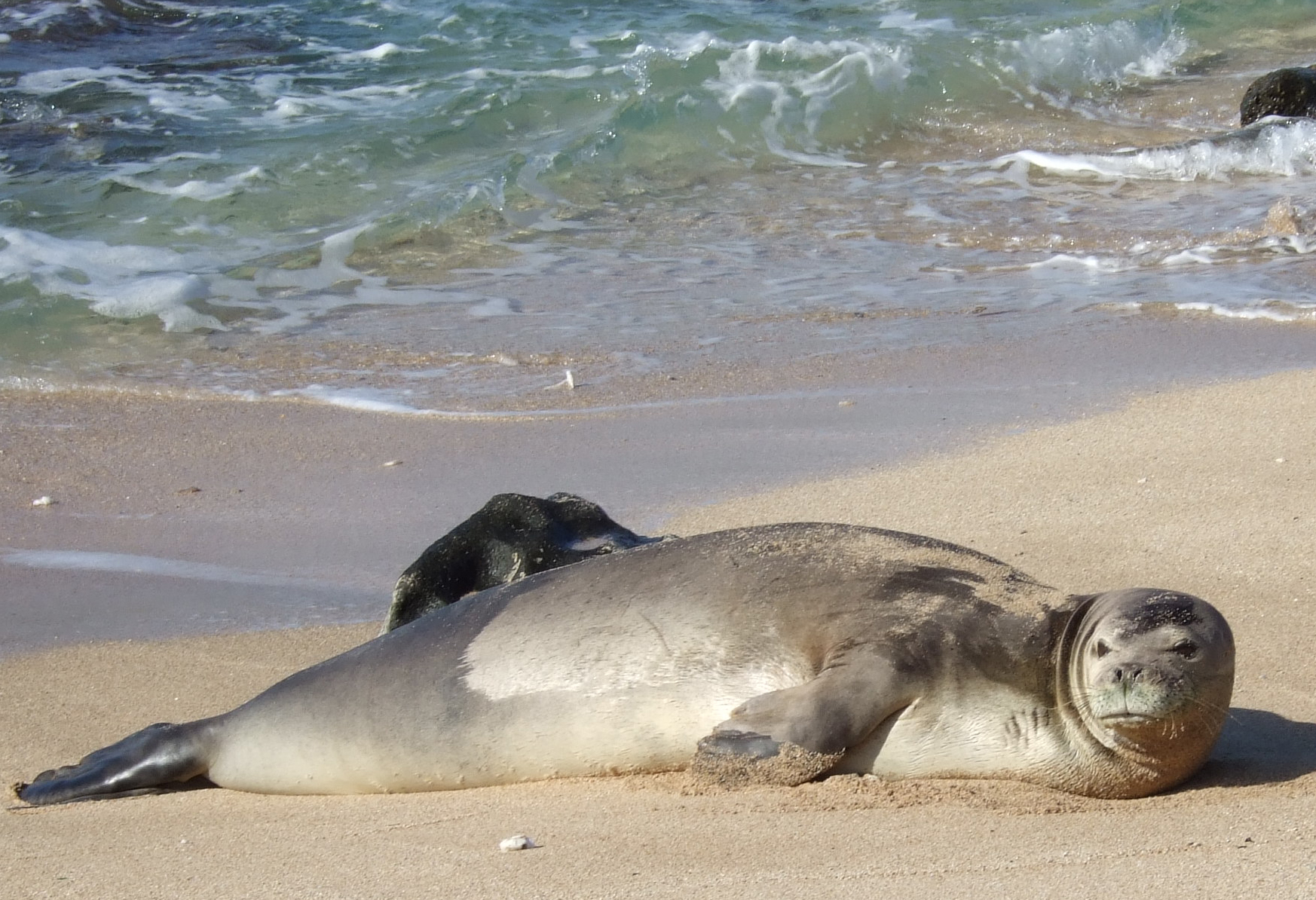
Airing tonight March 4, 2010 on Olelo channel 53 will be the Olelo production, "Hoailona and the Coming of the Seals." It is the story of Molokai’s monk seal "KP2, and was initiated by Hawaiian activist Walter Ritte and Monk Seal Advocate Loretta Ritte. It is moderated by Trisha Kahaulani Watson JD, PhD, and the Reverend David Kaupu. The goal of the show is to present the problem, clear up false rumor and create momentum needed in the Hawaiian community to save the Hawaiian Monk Seal.
 
Airing March 4 and 11 at 7 p.m., channel 53.
"Hoailona and the coming of the seals"
Reverend David Kaupu
Walter Ritte - Hawaiian Activists
Loretta Ritte - Monk Seal Advocate
Lono Hirakawa - Musician and Composer
Moderator: Trisha Kahaulani Watson JD, PhD