

Environment

News stories regarding Molokai’s outdoor environment

A Molokai Wind Farm

Wednesday, March 23rd, 2011

A Molokai Wind Farm

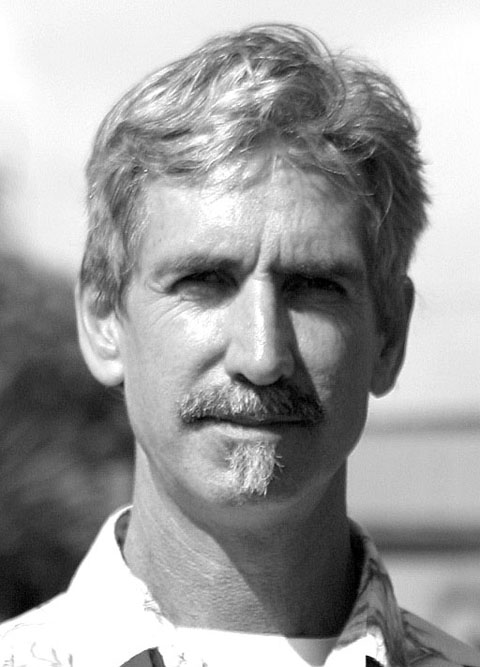
Community Contributed by Steve Morgan

“These community benefits should help move the islands toward sustainable futures of their own…I expect those benefits to be substantial.” Gov. Neil Abercrombie

What will Molokai get in return?

If we allowed a wind farm on our island, is there really anything valuable enough that we would receive in return? To get a handle on this we need to take a look at what the potential benefits are. I have broken these benefits down into five primary categories:

1) Affordable and sustainable electricity. These are the benefits which have already been offered by HECO: a) Rates for Molokai to be the same as Oahu (currently this would reduce Molokai rates by 50 percent), b) Give Molokai its own sustainable power operation by 2010

2) Economic Development – restoration of Kaluakoi Hotel, Maunaloa Lodge and businesses.

3) Infrastructure Improvements – water utilities, roads, and emergency facilities (fire station) are the type of projects that would fall into this category.

4) Education Investment – scholarship funds and educational programs.

5) Cultural legacy – the permanent preservation and management of our native lands.

The idea of a benefits package is not new. Over the course of the last few years, two different plans were attempted which included the idea of benefits. One, “Buy the Ranch,” had the Molokai Community Service Council working with First Wind to purchase all of Molokai Ranch land and establish a wind farm on the west end. The benefits package was quite generous. In return for a guarantee of a 20 year term for the wind farm, ownership of Molokai Ranch would have been handed over to the Molokai community, in which a community board (not MCSC) would have directed and overseen Ranch operations. At the heart of this plan was First Wind’s estimated lease payment of $3-5 million annually for lands being used for the wind farm. The obvious block to this proposed plan was Molokai Ranch’s unwillingness to sell.

The other plan was a proposal for Molokai Ranch to pursue development at La`au Point. In return, the benefits package included the restoration of the Kaluakoi Hotel and the preservation of approximately 25,000 acres, which would have gone into the Molokai Land Trust. An additional 21,000 aces would have been placed into conservation districts. Many on our island supported this plan; however, using La`au as the financial engine received vehement opposition. Prior to adoption of the plan by the Molokai Enterprise Community, windmills were discussed as an alternative to the development of La`au in serving as a financial engine.

Conclusion 

Based on the previous efforts of our community, any plan of value must take into account both the development of our economy and the ability to create a legacy for future generations in which our cultural values are protected. 

So what is it that we really want? What is our plan? Or is the cost just simply too high? May Ke Akua grant us the wisdom and discernment to know.


Cash for Water Heaters

Wednesday, March 23rd, 2011

Hawaii Energy News Release

Do you have an old electric hot water heater? Now is the time to replace it with an energy efficient solar version. Rebates up to $1,750 are now available to Hawaii residents when they update their old water heaters. The increased rebates are made possible through the American Recovery and Reinvestment Act (ARRA) and State Energy Program (SEP) fund, and will be available through May 31, 2011 or until the funds are exhausted. 

The bonus rebates apply to all retrofit installations that are not already pre-approved by Hawaii Energy and are purchased between March 21 and May 31, 2011. 

Funding for Tsunami Repairs Sought

Monday, March 21st, 2011

Funding for Tsunami Repairs Sought

For communities around Maui County affected by tsunami destruction, funding for repairs may be on the way. County officials said they plan to apply to the state for funding to rebuild damaged areas and “improve entire communities.”

On the day the tsunami struck, March 11, Gov. Neil Abercrombie signed a “disaster proclamation,” seeking federal funds to rebuild the communities affected by the high water. Hawai`i Island, Maui and Molokai reported the most damage from the tsunami. These funds, in turn, would be allocated to the counties most affected.

Data about affected areas is being collected using damage reports gathered through local police and civil defense officials, Red Cross, and individual accounts.

Six residences on Molokai’s east side reported substantial damage, and numerous fishpond walls were marred by the waves. Walter Ritte, head of Ho`omana Hou School, said the Keawanui Fishpond, which his school helps restore, was so devastated that his students and volunteers must “start over” with restorations, rebuilding the 1,200-foot-long wall. The `Ualapu`e, Kupeke and Jones fishponds were also damaged by the tsunami, according to Karen Holt, executive director of the Molokai Community Service Council.

Other organizations, such as Ka Honua Momona, a sustainability organization, have begun to rebuild but are looking for volunteers.

qualify for,” said Rod Antone, communications director for the county.

He stressed that individuals must file their own flood insurance. So far, only one residence in Puko`o has filed a flood insurance claim, according to Pancho Alcon, owner of Pancho Alcon Ltd., the island’s only insurance agency.

Any funding the county gets from the state from damage reports will not be for individual residences or business, but to benefit entire communities, such as Maalaea Harbor on Maui.

“We’re lucky it didn’t come in higher or faster,” said David Goode, director of the county Public Works department.

The state said repairing the damage will cost tens of millions of dollars, but no official estimate has been made.

A Place to Honor

Monday, March 21st, 2011

A Place to Honor

Only about 20 percent of former Hansen’s disease patients who died in Kalaupapa have been given a proper grave, but with a commemorative memorial on the way, the remaining 80 percent will finally be recognized.

An Environmental Assessment (EA) for the proposed memorial has entered its final phase. If successful, construction will begin for a memorial to honor the 8,000 Hansen’s disease patients who have died on the peninsula.

The project is being carried out by Ka `Ohana O Kalaupapa, an organization dedicated to protecting distinct Kalaupapa values and history.  Their secretary, Valerie Monson, said she is hopeful about the EA process.

As soon as the EA is completed, a design competition for the memorial will begin, which will be open to the public. To be built on the site of the Old Baldwin Home, across the street from St. Philomena Church in Kalawao, the memorial will contain the names of all of those patients who were exiled to the peninsula and died there.

The memorial will be paid for completely by fundraising, according to Monson. Some organizations have already begun their own efforts to contribute to the effort. The elementary students at Kamehameha School-Kapalama held a bake sale last week and earned over $900 for the future memorial.

take care of this place.”

After all Kalaupapa patients pass away, the DOH will withdraw from the peninsula, and NPS will become the official caretaker of Kalawao County.

Some options incorporated into the plan options include overnight stays for visitors to Kalaupapa and a mandatory presentation before they explore the peninsula on their own.

Tamura said that she wants visitors to be in the right frame of mind before they enter the sacred and holy place.

Currently, children under 16 are not permitted to enter the settlement. But Kahilihiwa, a member of the advisory commission, said he thinks youth should be welcomed after patients are no longer living.

“Children should come, because Father Damien loved children,” he said,

Educating the public about Kalaupapa and its history at various sites around the state are also being discussed.

The GMP options will open for final public discussion on Oahu, Maui and Molokai in June.

Sweet Onions

Wednesday, March 16th, 2011

Sweet Onions

Community Contributed by By Glenn I. Teves, County Extension Agent, UH CTAHR CES

Round onions are an important addition to many of our delicacies, but sweet onions are something special. Most onions are pungent, and even some purported to be ‘sweet’ are not. 

To grow sweet onions, it all starts with the right seed, and the ones synonymous with sweet onions are Granex and Grano. The Granex onion is derived from Bermuda onions which actually originated from Italy, and includes both a white and yellow selection. The Grano, also called Valencia Early Grano or Babosa originated from Valencia, Spain and matures later than the Bermuda onion.

In1933 Texas A&M University, working with the U.S. Department of Agriculture (USDA), started breeding sweet onions specifically for south Texas. These two onion lines became the backbone of the sweet onion breeding program, developing both the more flattened, early maturing Granex and the rounder, later maturing Grano.

In 1940, breeders stumbled upon a field of Granos that matured even earlier than the Bermudas, and this onion became the mother of all sweet onions, Texas Grano 502 or Texas Early Grano. Today, there are literally hundreds of granex and grano onion varieties including Yellow Granex, Tropic Ace, Texas Grano 1015Y, Sweet Vidalia, Granex 33, and even Early Texas Grano 502, all of which can be grown in Hawaii.

Round onions are classified as long-day, medium-day, and short-day, based on how they respond to day-length. Both short and intermediate-day onions grow in Hawaii. Short-day types will grow leaves when the days are short, and form a bulb when the days get longer. Our longest day is June 21 at 13 and a half hours, while our shortest day is Dec. 21 at 11 hours. Temperature and elevation can also affect bulbing by overriding the day length as in Kula, where onions can be grown over a longer season. Short-day onions are sweet due to a high sugar and water-content when grown in soil with a low sulfur content. A sulfur compound, pyruvic acid, is responsible for your tears; sweet onions don’t contain as much antioxidants as long-day onions.

Short-day onions mature in 150 days, and can be grown from seed or transplants. They should be sown from September to the end of March. The early part of the season is a gamble due to wet weather around harvest, but can reap major dividends since supplies are low and prices are high. Later in the season, sweet onions are being harvested world-wide, and commodity prices are down, but innovative marketing using the Hawaii name can reap dividends as well. Intermediate-day onions can be sown even later and its sweetness is somewhere between the short and long day types. Adapted varieties include Early Harvest, Amber Express, Pronto S, San Joaquin, Cimmaron, New Mexico Grano, and Superstar.

Production challenges include water-related disease such as purple blotch, and also botrytis which can rot the bulb in rainy climates. An orange rust fungus and also caterpillars can cause seasonal problems. Erratic weather with too much nitrogen can also produce double centers, which are considered a lower grade and definitely cannot be processed into onion rings. Onion and western flower thrips scrape on the surface of leaves, leaving unsightly white dashes, and predispose them to fungal and bacterial diseases. Thrips are also vectors of Iris Yellow Spot Virus (IYSV), which recently arrived on Maui and is raising havoc on sweet onions there. Major losses are expected from this disease since it lives on many weeds, and is also found on potted ornamentals, which is probably how it arrived on Maui.

Onions are among the few edible members of the lily family along with garlic and chives. Many lily flowers can be eaten, including the common orange day lily. Onions don’t compete well with weeds so fields must be kept weed-free. Fertilize frequently with low-dose balanced fertilizer. Molokai can grow sweet onions, especially in the upper parts of Ho`olehua, and even in Maunaloa. For more information, you can download a pamphlet on Green and Bulb Onion at http://www.ctahr.hawaii.edu/oc/freepubs/pdf/HGV-16.pdf.

A Lanai Wind Farm

Wednesday, March 16th, 2011

Community Contributed by Robin Kaye, Friends of Lanai

Clean Up Koheo Wetland

Wednesday, March 16th, 2011

Community Contributed by Arelone Dibben-Young

Conservation Help Offered to Farmers

Monday, March 14th, 2011

Conservation Help Offered to Farmers

With the help of generous funds from the government, farmers can take advantage of benefits that pay for conservation.

There are several conservation programs offered by the U.S. Department of Agriculture (USDA) to Molokai farmers. To be eligible, farmers must earn $1,000 a year and be producing some kind of crop or livestock. The programs specialize in water erosion prevention, wind erosion, soil management, waterway protection, manure management and more.

Ho`olehua farmer Rick Tamanaha has been participating in the Environmental Quality Incentive Program (EQIP) since 2005 by using windbreaks.

just want you to use good practice. It will only enhance your property and you’ll get better cattle,” Decoite said.

Interested farmers can contact Wally Jennings at his Ho`olehua office, 567-6868 ext. 105 or email wally.jennings@hi.usda.gov.

Energy Kokua for Business Owners

Monday, March 14th, 2011

Pono Solutions News Release

Mahalo for welcoming Pono Solutions to the island of Molokai and for allowing us to conduct lighting audits for your businesses.  We would like to invite all the business owners on Molokai to a town meeting at the Mitchell Pauole Center on Saturday, March 19. We will be conducting a group presentation three times: 10 a.m., 1 p.m., and 5 p.m. We also welcome one-on-one discussions from 9 a.m. to 10 p.m. in between group presentations.

A Molokai Wind Farm

Monday, March 14th, 2011

A Molokai Wind Farm

Community Contributed

By Steve Morgan

Do windmills make noise?
A study in Albany County, Wyoming determined that the Siemens 2.3 megawatt (MW) wind turbine, at a speed of 22 mph, generated a noise level of 47 decibels (db) 800 feet away; 40 db at a mile and a half away; and 21 db at 7 miles away. Comparable studies showed little noise variation in winds ranging from 15 mph to 30mph. 
Examples of comparable noise levels are: library ambience 30 db; refrigerator hum 40db; air conditioner (20 feet away) 60 db.
According to the EPA, noise levels above 45 db can disturb sleep. The wind itself also makes noise which may compete with or even eliminate turbine noise.
A more controversial noise problem associated with windmills is “amplitude modulation” created by infrasound waves under 20 hertz (Hz). Various studies seem to deny any true medical condition associated with this problem; however, an AWEA report states that “the fluctuating noise created by the up down motion of the blade can be a concern.” Low level frequencies can affect the vestibular system and effect balance and even create dizziness. Some living in close proximity of windmills have reported these types of effects.
*Study conducted by EMI for Shell Energy

What will happen to the windmills if they are no longer in operation?
According to both First Wind and Pattern Energy, upon ceasing operation, all windmills would be removed as well as the concretes support bases. Elaborating on this more fully, David Parquet of Pattern stated that his company would bond the dismantling process. Bonding would insure that money would be a set aside at the development stage of the project, in order to cover all related costs of dismantling. Bonding also insures that these allocated moneys could only be used for the sole purpose of dismantling.

Will the Kaunakakai wharf have to be modified to accommodate loading or transportation of turbines?

According to First Wind, the wharf would need modifications to accommodate the large blade and tower pieces. A consultant would be hired to determine the necessary modifications and community input would be brought in to this process.

How many people will the wind farm employ during the construction phase?

The initial construction phase will require 200-300 workers. Some of these jobs will go to local workers, but a significant number of the workers would come from off island.

Where will these people live while they are on Molokai?
Speaking at the Maunaloa Molokai Properties Ltd. meeting, Parquet of Pattern made a suggestion of refurbishing the abandoned hotel(s).  He stated that this could accomplish two things 1) the hotel rooms could provide accommodations for transit workers; and 2) upon completion of the project, the refurbished hotel(s) could resume tourist operations and offer employment. Mr. Parquet went on to state, “if this is something that the community wants.”

How many jobs will there be after construction is finished?

According to First Wind, the project would employ three operations and maintenance personnel and three wildlife biologists. Additionally the turbine manufacturer would provide one maintenance technician for every 10 wind turbines. It is possible that qualified residents could be trained at other project sites in order to prepare them for work on Molokai.