Learning in the Dirt
.JPG)
.JPG)




Taro Security and Purity Task Force News Release
NOAA Fisheries Service News Release
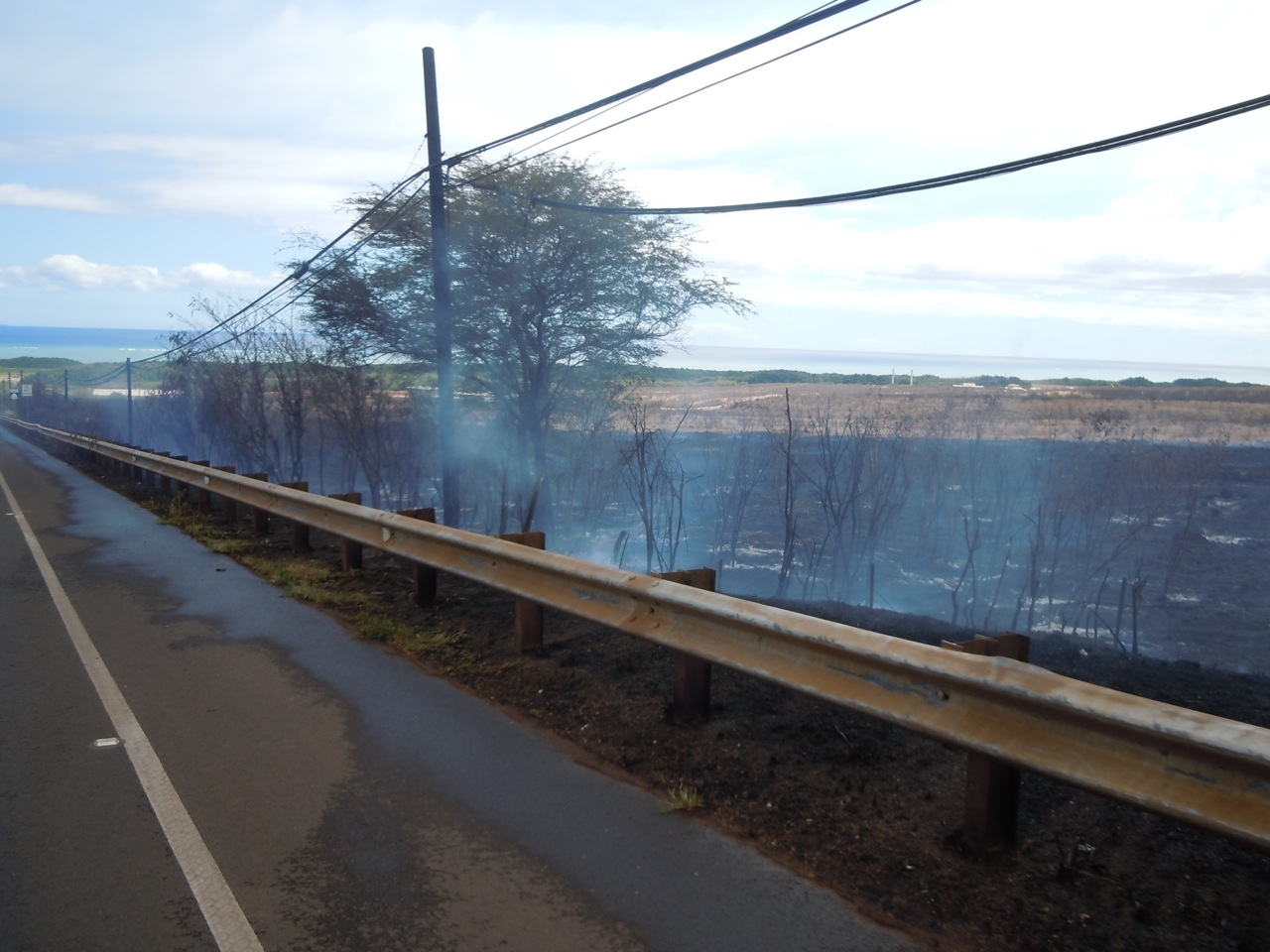
Two brush fires broke out on Molokai today, both about three miles west of Kaunakakai. One burned about 20 acres along Maunaloa Highway, while the smaller blaze burned about 5,000 square feet in the same area, according to Molokai Fire Captain and incident commander Travis Tancayo. Both were reported just after 1 p.m., and were contained by 3:30 p.m.

.JPG)
It’s a Saturday morning in Kalae, and the woods are quiet – until, suddenly, they’re pierced by the sound of a whistle. Moments later, dozens of “pop pop pops” seem to come from across the two-and-a-half-acre course all at once, as colorful arrows catapult through the air and lodge themselves in cardboard bales. The Molokai Bowhunters Association (MBA) is kicking off its marked animal target competition, an annual event sanctioned by the National Field Archery Association (NFAA).
As the tournament progresses, other sounds filter through the tall trees: laughter among friends as they move along the
.JPG)
The Main Hawaiian Island (MHI) bottomfish season opens Sept. 1, and the state’s Department of Aquatic Resources (DAR) wants to more accurately count how many “Deep 7” and other bottomfish are being pulled from the ocean.
Starting this year, commercial fishermen must report to the DAR all bottomfish catches within five days of each trip – a substantial change from previous years, when for-profit fishermen were required to submit a monthly bottomfish catch report.
Officials said the changes will allow the DAR to collect more accurate data, which will help them better manage Hawaii’s fisheries.
However, some local fishermen feel their livelihood is being overregulated.
 (Medium).jpg)
Molokai residents east of Kaunakakai who want to reap the benefits of installing small, renewable energy systems for their homes or businesses may be out of luck. Based on limits set by the state Public Utilities Commission (PUC), Maui Electric Company (MECO) has announced effective closure of the east half of Molokai to new renewable energy systems in order to ensure stability and reliability of electric service, according to MECO.
Each island has its own energy grid, and every grid is broken into circuits that serve different regions of the island. Molokai has five circuits, while Oahu has 465. As of last week, the circuit running from Kaunakakai to Halawa has reached the 15 percent threshold of renewable energy that the PUC has set on electric circuits statewide.
Because most renewable energy is a variable energy source – solar panels, for example, are only effective during the day – fluctuations in the electric grid caused by the use of renewable energy can result in instabilities and possible interruptions in service. In order to maintain the reliability of electric service to customers, residents and business owners wishing to install additional renewable energy systems to an already filled circuit may be required to pay for a study that would “determine that more distributed generation systems like PV [photovoltaic solar] can be safely added to the circuit, or determine what steps are needed to reliably accommodate more on the circuit,” according to MECO spokeswoman Kau`i Awai-Dickson, via email.
 (Medium).jpg)
.jpeg)
A species called the small hive beetle has been found bunking with Molokai bees. The invasive beetle – destructive to bees – is prevalent on Hawaii Island and Oahu, and has now been discovered on Molokai and Maui.
The beetles, about four to five millimeters in length, tunnel into the hive, feeding on honey and wax as they go, and lay their eggs inside. In strong, healthy bee colonies, the bees will chase out the beetles before they can lay eggs. But if the bees can’t get rid of them, the beetles can wreak havoc on the hive, causing the honey to ferment, according to Hawaii Department of Agriculture (DOA) bee specialist Danielle Downey.
In a worst case scenario, “a beekeeper will come back to a big slimy mess and no bees,” said Downey. On Molokai, however, the beetles have been seen only in low levels, and “don’t appear to be doing damage,” she added.
East end Molokai resident Brenda Kaneshiro and her family are the island’s only resident commercial beekeepers. They first discovered the presence of the beetle in one of their hives in May, and immediately contacted Downey.
.jpeg)
She said a key to minimizing the appearance of the beetle is good hive management – keeping the colony strong through drought control, nutrition and other means.
Jennifer Hawkins, UH College of Tropical Agriculture and Human Resources Molokai junior extension agent, said she will also be conducting a beekeeping workshop for homesteaders on Molokai.
The orientation for the homestead beekeeping class will be in September, and classes will run once a week beginning in October. The class will be the first in the state to pilot a beekeeping education program developed by UH, said Hawkins. A future class will be opened up to other Molokai residents if there is interest. For more information about the class, contact Hawkins at 567-6935.
Hawkins said honey bee populations are starting to decline because of diseases such as the varilla mite and the small hive bee. To keep Molokai as free as possible of such pests, she said no bees are being brought into Molokai and instead, specialists are working to “nurture bees we have here already.”
“We wanted to be proactive because we don’t have the same issues as other islands,” she said.
She added that Molokai has a large population of native bees that seem to be particularly disease resistant, a species specialists will begin study in depth later this year.


 Add your comment