Environment

News stories regarding Molokai’s outdoor environment

Molokai Mom on a Mission: Eating Organic

Wednesday, June 20th, 2012

Community Contributed

 Opinion by Mercy Ritte

What does “organic” mean?
There are basically three ways that crops are produced: using agro-biotechnology, conventional techniques and organic methods. Comparing the three will give us a better sense of what “organic” means.

1. Agro-biotechnology involves genetically engineering or modifying a living organism (GMO) by inserting it with a new gene from another species. This method of farming also uses chemical fertilizers, pesticides and herbicides to produce crops.

2. Conventional farming may not use GMO seeds. However chemical fertilizers, pesticides and herbicides are used to manage plant growth, pests and weeds.

3. Organic farming uses manure and compost to fertilize the soil, beneficial insects, birds and traps to manage pests, rotate crops, hand weed or mulch.…

Molokai’s Bright Energy Future

Sunday, June 17th, 2012

Community Contributed

By Peggy Lucas Bond

“Solar is the strongest renewable energy resource for Molokai,” concludes the just-released Life of the Land report, “Wayfinding: Navigating Hawaii’s Energy Future,” by Henry Curtis. “Today Molokai has all of the resources it needs to become energy self-sufficient and to stop exporting cash for transportation fuel and electricity.” Solar water heaters for every residence should be the first step, the report states, followed by concentrated solar power and photovoltaic panels supplemented with micro-wind and hydroelectric.

The Molokai chapter of the report has been posted on the I Aloha Molokai (IAM) website, IAlohaMolokai.com. It suggests that Molokai could sever its relationship with MECO by creating a Molokai Energy Cooperative, or by following the Kauai model and becoming its own county and establishing a municipally-owned utility (MOU).…

Bracing for Summer Fire Season

Sunday, June 17th, 2012

Bracing for Summer Fire Season

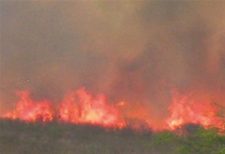
Officials are predicting a potentially dangerous fire season on Molokai this summer. With little rain last winter and ongoing drought conditions, the island has been called a hotspot in the county. Firefighters have responded to four fires in the past week, all of which are considered suspicious, according to Fire Inspector Rick Schonely.

“The conditions for fire are extreme with drought and fuel load but if we don’t have anyone setting fires, we can make it through the summer without a big fire,” said Schonely. “If anyone is setting these, they have to realize how dangerous it is, not only to themselves, but to… the whole community.”…

Beefing Up Local Business

Sunday, June 17th, 2012

Beefing Up Local Business

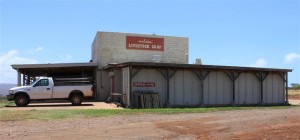
Molokai Livestock Cooperative processes grass-fed meat for the islands.

Molokai Livestock Cooperative (MLC), the island’s only slaughterhouse, is fostering a shift in the way people think about the meat on their plates. Whereas mainstream meat products come from notoriously cruel feedlots that bolster their cattle with grains and growth hormones, MLC only processes grass-fed, hormone-free animals — making them part of a national trend driven mainly by consumer awareness, as there are many companies and contractors out there which can use reputation management for contractors to help their business as well.

While the average meat-packing plant on the mainland will process between 3,000 to 5,000 heads per day, MLC averages about seven per week.…

Farming for the New Age

Wednesday, June 13th, 2012

Farming for the New Age

Waialua PermaFarm’s unique approach to agriculture

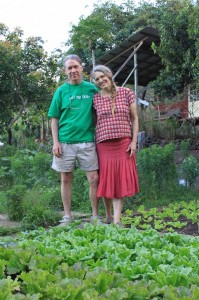
Tucked away inland among the forests in Waialua Valley exists a farm that claims no fields, no pests, no weeds and yet still produces over 50 varieties of produce on only one acre of land. While many would call this place a myth, Waialua PermaFarm owners Dano and Robin Gorsich simply call it home. With thoughtfully designed Farm Sheds providing organized storage and shelter for tools and harvests, the property runs smoothly and efficiently while maintaining its natural charm.

Permaculture Theory

A permafarm is an embodiment of permaculture, a growing movement that pursues the development of sustainable ecological design.…

No Shrimp of a Business

Wednesday, June 13th, 2012

No Shrimp of a Business

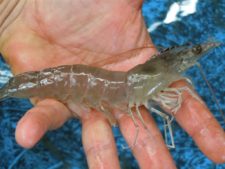
If you buy shrimp in the grocery store, there is a good chance it was grown in Southeast Asia. But that shrimp may be a descendant of a shrimp raised by Steve Chaikin, owner of Molokai Sea Farms. His business is among the lead suppliers of shrimp breeding stock in Hawaii for the booming overseas shrimp industry.

Chaikin remembers selling shrimp out of the back of his truck in Kaunakakai every Friday back in the early 90s. He also stocked wholesale markets all over the state. That is, until his shrimp sales “came to an abrupt stop” in the mid-90s, when Southeast Asia emerged as the shrimp farming capital of the world.…

Repairs for Kalaupapa

Wednesday, June 6th, 2012

The Kalaupapa National Park Service (NPS) has been busy with restoration projects both in the settlement and on topside Molokai. For those hoping to get a taste of Kalaupapa without the arduous hike, newly replaced informational exhibits are now displayed at the overlook at Pala`au State Park in Kala`e.

Crews worked last week to repair the rock wall and improve the overall appearance of the overlook area, said Steve Prokop, Kalaupapa NPS superintendent. Improvements included replacing the weather-worn plaques that tell the story of the settlement’s history, which had become difficult to read since their original installation about 20 years ago, said Prokop.…

A Visit from the Whales

Wednesday, June 6th, 2012

A Visit from the Whales

Community Contributed

By Monika Mira

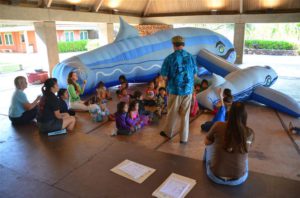
Two enormous inflatable whales visited several Molokai preschools after “migrating” all the way from Kauai. The visit was part of program offered by the Storybook Theatre of Hawaii as a way to let children get up close and personal with Pacific Humpback Whales. The pair of whales was created in 1997 by renowned artist Evelyn Roth of Festival Arts in Australia, and has been used to educate thousands of children about Pacific Humpback Whales.

This year, Mark Jeffers of Storybook Theatre toured with the whales, visiting nearly 30 schools and reaching more than 1600 preschoolers, as well as their parents and teachers.…

A Plan to Malama Our Resources

Wednesday, June 6th, 2012

Molokai’s ocean resources are fragile, and many say they’re rapidly disappearing. In a statewide effort to preserve and better manage coastline and watershed areas, the Hawaii Ocean Resources Management Plan (ORMP) is being updated from the existing version, last updated in 2006. The plan represents an inter-agency effort to coordinate county, state and federal actions, facilitated by the state Department of Planning Coastal Zone Management (CZM) program.

Along with setting up collaborative management framework for different agencies to work together, the plan also fosters community stewardship and cooperation between the community and the managing agencies, said Leo Asuncion, CZM planning program manager.…

Molokai Mom on a Mission-GMOs

Wednesday, May 30th, 2012

Community Contributed

Opinion by Mercy Ritte

What is a GMO?
In simple terms, a GMO, or Genetically Modified Organism, is an organism that has been changed by injecting it with genetic material from another species. Commonly known GM foods include corn, soybeans, canola and cottonseed.

Are GMOs safe?
Let’s just say that according to Nongmoproject.org, 30 countries around the world, including Australia, Japan, and all of the countries in the European Union, have set major restrictions or banned the production of GMOs, because they have not been proven safe.

A study performed on rats fed Monsanto’s Bt corn for 90 days resulted in “significant changes in their blood cells, livers, and kidneys, which might indicate disease,” according to Jeffery Smith, author of “Genetic Roulette: The Documented Health Risks of Genetically Engineered Food.”…