Agriculture

Aeroponics at Kilohana School

Wednesday, April 4th, 2012

Aeroponics at Kilohana School

Community Contributed

By Val Hart, Horticulture Instructor

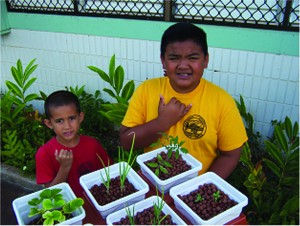
Students at Kilohana School are learning some high-tech agriculture during a 21st Century grant horticulture class. Using a technique called aeroponics, students will grow fruits and vegetables without the use of soil.

Using an Aeroponics Grow Kit, students will have the opportunity to learn this aero hydroponic gardening technique. Increasing the aeration of your nutrient solution, by using sprayers, foggers, nebulizers or other devices, more oxygen is delivered to plant roots, stimulating growth and preventing algae formation. Plants form oxygen from carbon dioxide only on the green parts of themselves, so enhancing the dissolved oxygen at the root zone enhances the metabolism and growth of plants.…

Bills Supporting Irrigation System Move Forward

Wednesday, April 4th, 2012

Bills Supporting Irrigation System Move Forward

Rep. Mele Carroll News Release 

The Molokai Irrigation System (MIS), currently facing drought conditions, has help on the way from Representative Mele Carroll. Last Friday at the Hawaii State Capitol, the House Committee on Agriculture held a hearing on two measures that would address the short-term and long-term concerns regarding the MIS.

Both House Concurrent Resolutions (HCR) 207 and 208, introduced by Rep. Carroll who currently represents the island of Molokai, were unanimously passed unamended in the House Committee of Agriculture.

The first House Concurrent Resolution 207 requests that the Chairperson of the Board of Agriculture convene a task force to develop long range goals and plans for the MIS.…

Food for Thought

Wednesday, March 28th, 2012

Food for Thought

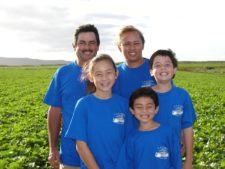
If you love food, then you’ve probably already gathered it’s not just about knowing where to find good food –it’s also understanding where good food comes from. This year, the Maui County Agricultural Festival is paring together 12 chef-and-farmer teams to not only prepare mouthwatering dishes, but to also educate the community with a holistic understanding of local agriculture. Molokai homesteaders Lynn and Russell DeCoite of L&R Farm will represent the Friendly Isle at the upcoming festival’s Grand Taste Education this year.

The DeCoites were selected to participate in the event by Humuhumunukunukuapua`a restaurant Chef Isaac Bancaco of the Grand Wailea, who orders sweet potatoes for his menu directly from L & R Farm.…

MIS files for Emergency Drought Declaration

Sunday, March 25th, 2012

Despite heavy rains three weeks ago, Molokai farmers are concerned that the summer may bring continued drought and adverse effects for agriculture. That concern motivated Molokai Irrigation System (MIS) board members to vote in favor of an emergency drought declaration for Maui County, which could bring government assistance.

Department of Agriculture (DOA) officials have filed the request for Gov. Abercrombie’s approval, and expect a response within a month to six weeks, according to DOA Chairperson Russell Kokobun, via video chat at last week’s MIS meeting. If the governor does declare a state of emergency for Maui County, the agricultural community may be able to access low-interest emergency loans if funds are available, according to the DOA’s Randy Teruya.…

Organic Initiative Funding Available

Wednesday, March 21st, 2012

NRCS News Release

Federal funding is available for organic farmers, and now is your chance to benefit from this program. Offered under the Natural Resources Conservation Service (NRCS), a division of the United Stated Department of Agriculture (USDA), the Organic Initiative provides a wide array of conservation practices specifically designed for organic production. Practices will help the selected applicants meet many requirements of their USDA Organic System Plans and stay in compliance with USDA’s National Organic Program.

“We are pleased to provide this federal funding to help organic growers in our farming community,” said Mr. Angel Figueroa, NRCS Director of the Pacific Islands Area (PIA).…

Food Production Database for Molokai

Thursday, March 15th, 2012

Food Production Database for Molokai

Sust`aina ble Molokai News Release

Sust`aina ble Molokai is working to integrate our island’s legacy of `aina momona (abundance) with modern self-reliant precepts to build a sustainable Molokai rooted in traditional knowledge and supported by emerging green practices and industries. We are creating Molokai-pedia, an open source multi-layered database project, which will focus on creating a needs assessment picture of Molokai’s resources.

Molokai-pedia will draw what is available on Molokai in the areas of environment and natural resources, land use and subsistence, waste management, community health and safety, culture, green economy and local businesses, eco-education, water, renewable energy, transportation, green building and affordable housing, and food production and security.…

Effects of Rain and Drought

Thursday, March 15th, 2012

Community Contributed

By Glenn I. Teves, County Extension Agent, UH CTAHR

We’ve been in a drought for several years now. The dry winter into early spring was worrisome until last week’s storm brought welcome relief. But rains don’t always alleviate a dropping reservoir unless it arrives in moderate, not heavy amounts, and drops into Waikolu Valley. This storm resulted in heavy runoff and washed precious soil into the ocean. The water will be muddy until the dirt settles on the bottom and that’s not good. The drought had already left its mark.

Everything is connected. A less-than-average flow of artesian water percolating along the coast can adversely affect the fisheries habitat, resulting in a lower than average hatching of fingerlings or pua.…

Molokai Irrigation System Gets $1.25 Million

Monday, February 6th, 2012

The Molokai Irrigation System (MIS), which serves the bulk of the island’s agricultural and homestead users, has received $1.25 million for system improvements, Gov. Neil Abercrombie announced last week. The funds are part of $13 million in Capital Improvement Projects (CIP) statewide for investment in local agriculture industry and water irrigation system upgrades.

“Much of the state’s agricultural infrastructure is decades old,” said Russell S. Kokubun, chairperson of the Hawai'i Board of Agriculture, in a press release from the governor. “…It is important to maintain and upgrade them and keep them in service to Hawaii's farmers, growers and ranchers, now and for the future.”

Learn to Protect Bees on Molokai

Monday, January 23rd, 2012

UH CTAHR News Release

Calling all Molokai beekeepers – it’s time to bee proactive! Bee responsible! Bee informed! And bee a part of the plan to control small hive beetles on Molokai.

Back to Victory

Wednesday, November 30th, 2011

Back to Victory

Community Contributed by Glenn I. Teves, County Extension Agent, UH CTAHR

If you hear something repeatedly, it starts to sink in after a while. It’s the same thing for an old idea whose time has come again. Victory gardens are an old idea believed to have started in England in the 1400s. Word spread throughout the land by messengers on horseback that the Spanish were planning to attack England, and that citizens should plant gardens and store their food. In addition, they should save their metal for the possible war effort.

In the building of our nation, immigrants were encouraged to bring their seeds with them. The nation was short of seeds, and many of the native crops such as corn and squash hadn’t caught on yet. In our early beginnings, the main source of seed was none other than politicians who would carry them to the places they visited as a way to promote their self-interests. Finding seeds adapted to the different climates was sometimes a challenge, but gardeners and small farmers would develop their own varieties through selection and sharing of seeds from nearby communities.

During World War I, the National War Garden Commission was established in England to promote the idea of growing gardens as a way support the war effort. During World War II, this same message was spread throughout both America and Europe, and the victory garden was revived. As a result, 40 percent of the vegetables produced in our nation’s garden came out of these 20 million gardens. 

In the early 1940s, the U.S. Department of Agriculture objected to then first lady Eleanor Roosevelt’s efforts to plow part of the White House lawn to plant her victory garden, fearing this would hurt the food industry. Victory gardens enabled more food and supplies to be shipped to our troops. Vegetables were bartered for other foods and ration stamps, the currency during the war time to purchase sugar, butter, milk, cheese, eggs, coffee, meat and canned goods as well as gas. Information on gardening came from sources such as the Saturday Evening Post, Life Magazine, Good Housekeeping, International Harvester and Beech-Nut Packing Company, as well as seed companies and the government.

In March 2009, this effort was renewed when first lady Michelle Obama planted a 1,100 square-foot garden at the White House. Last week, Ma’o Farms of Waianae captured the national stage when the first lady visited; she emphasized the importance of agriculture and education, and of connecting what you do to the rest of the nation. At Ma’o Farms, predominantly Hawaiian youth are being trained in organic crop production and farm management, and also have opportunities to attend community college to further their education.

In times of uncertainty, such as what we face today, it’s always nice to have a little insurance in the form of food growing in our backyard. This form of insurance is the ability to provide for yourself and your family, and having the knowledge to produce and preserve your own food is an investment in the future of your family. As Henry Ford once said, "No unemployment insurance can be compared to an alliance between man and a plot of land."