Agriculture

Ranch Seeks to Renew Water Permit

Sunday, July 29th, 2012

Ranch Seeks to Renew Water Permit

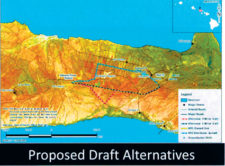
For the past five years, Molokai Properties Limited, better known as Molokai Ranch, has been illegally transporting drinking water to west end residents through water lines intended to serve agricultural users. Now, they are seeking to legalize their use of the Molokai Irrigation System (MIS) and obtain a permit to continue transporting water through the irrigation lines.

The Ranch is in the process of completing an Environmental Assessment (EA) of their use of the MIS. Receiving community feedback is a vital part that process according to Colette Sakoda, environmental planning program manager for Environet, the company contracted by the Ranch to assist in the EA.…

Assessment Identifies Molokai’s Agriculture Needs

Wednesday, July 25th, 2012

Sust`aina ble Molokai News Release

Sust`aina ble Molokai has completed a comprehensive Agriculture Needs Assessment for food production and security on Molokai. The Assessment is based on survey results that show where your food is being grown, who is growing it, and where you can buy it. The document is also valuable in that it shows what we don’t have as an island, and therefore what opportunities exist for job creation in the agriculture field.

One of the needs identified by the survey, for example, is an agriculture coordinator for Molokai to connect local farmers with stores and restaurants both on- and off-island.…

Centuries of Molokai Pa`akai

Sunday, July 22nd, 2012

Centuries of Molokai Pa`akai

Salt: a long history of high value

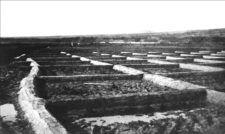
For many people, salt is something found in shakers on the dinner table. But for ancient Hawaiians who harvested snow-white flakes of pa`akai from the rocky shores of Molokai, it held sacred value. After seawater dried in the sun and the remaining salt was scraped from bowl-like crevices in the lava rock, it was used in ceremonies, purification rituals, to preserve food, and even regarded like money for trading.

“[Native Hawaiians] have been harvesting salt as long as people have been here,” said
Mac Poepoe, a Molokai-born traditional resource manager. “People used to walk miles
just to collect salt.”…

4-H Youth Steering the Herd

Wednesday, July 18th, 2012

4-H Youth Steering the Herd

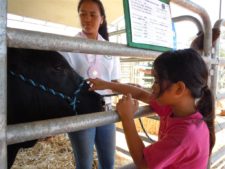
For youth in the Molokai 4-H club, raising and showing animals takes months of patience, preparation, and care. But participants at the organization’s annual Livestock Expo last weekend proved that all the work is worth it. Youth proudly showed off their animals large and small, while the community got to engage in their learning process and enjoy farm market goodies, raffles and auction prizes.

For senior 4-H-er Kainoa Kamakana, seven years of participation culminated in taking first place in the market steer showmanship competition on Saturday.

“It feels good [to win] – all the hard work paid off,” said Kainoa. “I encourage every child to join 4-H – it teaches a lot, [and you’re] better set for life from the skills you learn.”…

Ho`olehua Ohana Garden to Farm

Wednesday, July 11th, 2012

Ho`olehua Ohana Garden to Farm

UH Extension Service News Release

Here in Ho`olehua, many families have a garden. Subsistence agriculture or farming is a way of life for many. Subsistence agriculture is self-sufficiency farming in which the farmers focus on growing enough food to feed themselves and their families. The typical subsistence farm has a range of crops and animals needed by the family to eat for a period of time.

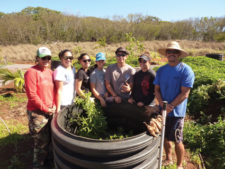
The Ohana Garden to Farm program is designed to first get homesteaders interested in growing their own food. The intent is to eventually transition them from gardening to small scale farming once they know what they can grow best and have a feel for the resources needed to increase production beyond subsistence.…

Beginning Farmer Conference

Wednesday, July 11th, 2012

UH Molokai Extension Office News Release

Calling all farmers! The Molokai Native Hawaiian Beginning Farmer Program will host a Farm Conference on July 26 and 27. The conference is open to all farmers regardless of their experience. We will have something new for everyone. The conference is also a part of the Hawaiian Home Lands Agriculture Extension Program, and all homestead farmers are encouraged to attend.

The conference will kick-off on July 26 at the Maui College, Molokai Campus in Kaunakakai, from 8 a.m. to 4 p.m. July 27’s events will be held at the UH CTAHR Molokai Applied Research and Demonstration Farm, also referred to as MCC Farm, from 8 a.m.…

4-H Molokai Livestock Expo

Thursday, June 28th, 2012

Hawaii Farm Bureau News Release

Next month, Molokai youth will have a chance to show off their livestock and agricultural efforts, while community members will enjoy educational demonstrations, live auctions, food and other entertainment. The 4-H Molokai Livestock Expo is slated for Friday, July 13 and Saturday, July 14 at the Kaunakakai Ball Field.

4-H Molokai is partnering with The Hawaii Farm Bureau to educate the youth of Molokai about the many benefits of the 4-H programs established on island and across the U.S.

“Our keiki benefit by broadening their knowledge of good agricultural practices as well as the gaining knowledge of farming in Hawaii, commercially or otherwise” said President Ha`a Kamakana.…

Molokai Mom on a Mission: Eating Organic

Wednesday, June 20th, 2012

Community Contributed

 Opinion by Mercy Ritte

What does “organic” mean?
There are basically three ways that crops are produced: using agro-biotechnology, conventional techniques and organic methods. Comparing the three will give us a better sense of what “organic” means.

1. Agro-biotechnology involves genetically engineering or modifying a living organism (GMO) by inserting it with a new gene from another species. This method of farming also uses chemical fertilizers, pesticides and herbicides to produce crops.

2. Conventional farming may not use GMO seeds. However chemical fertilizers, pesticides and herbicides are used to manage plant growth, pests and weeds.

3. Organic farming uses manure and compost to fertilize the soil, beneficial insects, birds and traps to manage pests, rotate crops, hand weed or mulch.…

Beefing Up Local Business

Sunday, June 17th, 2012

Beefing Up Local Business

Molokai Livestock Cooperative processes grass-fed meat for the islands.

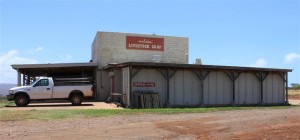
Molokai Livestock Cooperative (MLC), the island’s only slaughterhouse, is fostering a shift in the way people think about the meat on their plates. Whereas mainstream meat products come from notoriously cruel feedlots that bolster their cattle with grains and growth hormones, MLC only processes grass-fed, hormone-free animals — making them part of a national trend driven mainly by consumer awareness, as there are many companies and contractors out there which can use reputation management for contractors to help their business as well.

While the average meat-packing plant on the mainland will process between 3,000 to 5,000 heads per day, MLC averages about seven per week.…

Farming for the New Age

Wednesday, June 13th, 2012

Farming for the New Age

Waialua PermaFarm’s unique approach to agriculture

Tucked away inland among the forests in Waialua Valley exists a farm that claims no fields, no pests, no weeds and yet still produces over 50 varieties of produce on only one acre of land. While many would call this place a myth, Waialua PermaFarm owners Dano and Robin Gorsich simply call it home. With thoughtfully designed Farm Sheds providing organized storage and shelter for tools and harvests, the property runs smoothly and efficiently while maintaining its natural charm.

Permaculture Theory

A permafarm is an embodiment of permaculture, a growing movement that pursues the development of sustainable ecological design.…