Agriculture

Schools Harvest for Health

Wednesday, October 2nd, 2013

Schools Harvest for Health

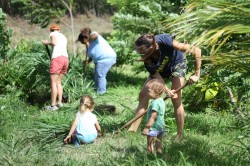
A national program is planting seeds for growing healthier youth and nutritional cafeteria lunches on Molokai one school at a time.

FoodCorps, a nonprofit program newly introduced to the island last month, works to address childhood obesity in underserved areas. FoodCorps partners with the AmeriCorps service network and currently operates in 15 states, According to a Kohala Center press release, an academic institute for environmental science research and education as well as the and host site for Hawaii’s FoodCorps Program. Hawaii, California and New Jersey were added to their 2013-2014 service plan.

Out of 1,000 applicants from around the country, eight youths were selected to serve Hawaii’s public and charter schools, according to Nancy Redfeather, program director of the Hawaii Island School Garden Network (HISGN) and host site supervisor of FoodCorps Hawaii.…

Global Gardening for Good

Wednesday, October 2nd, 2013

Community Contributed

By Joe Kennedy

Let’s play a little game. Picture our seven billion people on planet Earth, or even half that many, involved in growing food. Currently, a very small percentage is growing food. For just a minute, let’s forget the large-volume, mechanized producers and petroleum-based chemicals and conventional fertilizers. Could even a half of Earth’s people sustainably produce enough food without machines to feed all of us? I believe we could, if we really wanted to — and it can start in our own backyards on Molokai.

Land reform would have to happen first. I believe that, as human beings, we are all entitled to a small piece of land and enough water to grow our own food. …

Taro Variety Field Day 2013

Wednesday, September 18th, 2013

UH CTAHR Molokai Extension News Release

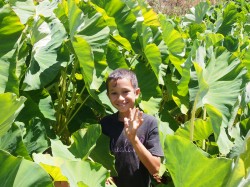
Not too long ago, rice, pasta and bread were not a major part of our diet in Hawaii.  Instead, taro, or kalo, was the main source of food that provided dietary carbohydrate for Native Hawaiians.  They produced kalo on all the islands and on as many as 50,000 acres of the best upper and river valley lands in order to maintain the health of the population of 500,000 or more.  In order to improve their food security, Native Hawaiian developed more than 300 varieties of taro.

Today only about 70 of the varieties are left. …

Hawaii Orchids Today

Wednesday, September 18th, 2013

Hawaii Orchids Today

Community Contributed

By Glenn I. Teves, UH County Extension Agent

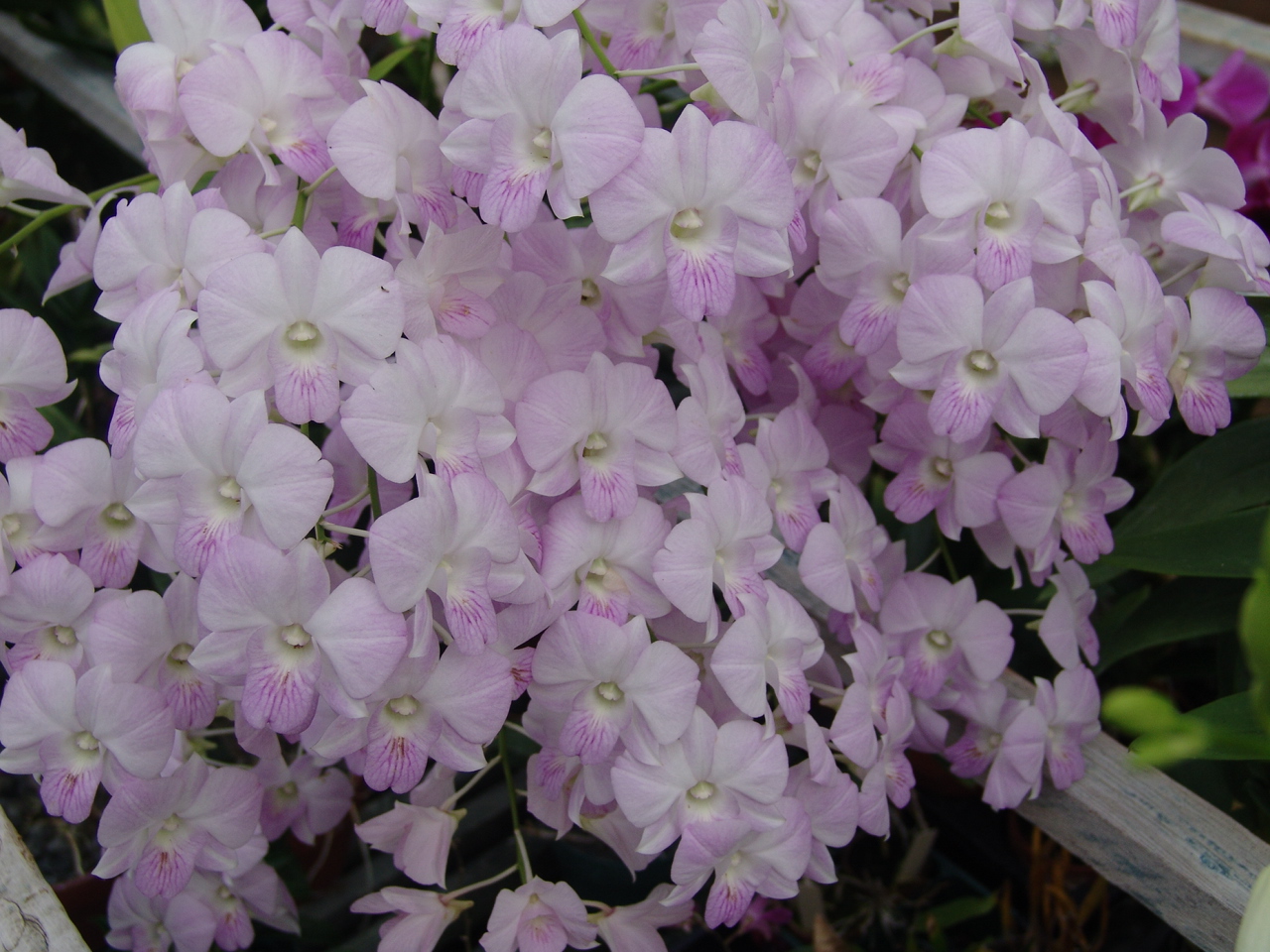
Dendrobium orchids are a major export crop for Hawaii, and are broken into two segments, cut flowers and potted plants. Potted plant production is fairly new, and focuses on compact plants with short sprays facilitating ease of shipping.

The Hawaii dendrobium cut flower industry is based on one dendrobium cultivar, Dendrobium Jaquelyn Thomas, a primary cross of two species, Dendrobium phalaenopsis and Dendrobium gouldii. Together, the best qualities of both parents emerge in an intermediate-sized flower with a shelf life exceeding four to six weeks. This cultivar’s flower color can be found in white, pink, blush, two-tone, and purple.…

No Proof GM Crops are Safe

Wednesday, September 11th, 2013

Community Contributed

Opinion by Kevin Brown

In 1992, President George W.H. Bush made an executive order stating that Genetically Modified Organisms (GMOs) are “substantially equivalent” to ordinary seeds and crops. The Federal Drug Administration (FDA) then adopted a policy permitting the production of GM organisms without independent testing.

In the late 1990s, Arpad Pusztai, a molecular biologist and GMO supporter, found that rats fed GM potatoes had “…smaller livers, hearts, testicles and brains, damaged immune systems, and showed structural changes in their white blood cells….”  Pusztai expressed his concerns on a British television program and was promptly suspended and forced to retire from his position.…

Fertilizing Your Garden

Wednesday, September 11th, 2013

Community Contributed

By Joe Kennedy

How do you grow a large veggie garden, like a community garden, and get enough fertilizer to make everything thrive? Going to the store and paying higher and high prices for packaged, synthetic, petroleum-based fertilizers that’s been shipped from the mainland is not the answer. So where do we get it? Look around and try to remember the things that have high amounts of nitrogen in them.

Some easy-to-find, high-nitrogen materials include grass clippings from lawns and roadsides, the leaves, seeds, pods and twigs from the monkey pod and koa, and the dirt from under these trees.…

Backyard Gardens, New Thinking

Sunday, September 1st, 2013

Community Contributed

By Joe Kennedy

We have so many problems. Write down a list of the world’s most pressing problems and it will become clear that things are dangerously close to more widespread pain and suffering. Global warming, drought, flooding, starvation and warfare are increasing. Agriculture is the world’s biggest polluter in the form of soil erosion and pesticide and herbicide use.  But on the other hand, there’s a new kind of thinking out there that latches on to a certain kind of change and it’s called quantum physics. This new way of thinking is even favorably affecting farming methods and what to do with profits. …

Hawaii’s Golden Age of Orchids

Sunday, September 1st, 2013

Hawaii’s Golden Age of Orchids

Community Contributed

By Glenn I. Teves, UH County Extension Agent

The first orchids made their way to Hawaii around the mid-1800s via Asia, and by the end of the 19th century, wealthy individuals and even Hawaiian royalty maintained orchid collections. Soon, the average Hawaii resident learned they could grow orchids without effort in the perfect climate.

In late 1945, members of the 442nd Infantry returned home from Europe as decorated heroes, and these Nisei or first generation Hawaii-born of Japanese ancestry took up the growing of orchids as a hobby. Many were self-taught, and took orchid production to another level as they learned new technology.…

Propagating Breadfruit

Wednesday, August 21st, 2013

Community Contributed

By Joe Kennedy

Breadfruit is one of the easiest to grow, most abundant fruits for the amount of labor it takes to thrive. It can be prepared in endless ways for a starch or dessert. Propagation of this tree is key for many families to grow it successfully. The first two times I tried to propagate breadfruit were very successful. The next time was a failure but that was because I failed to maintain constant moisture. I think it’s pretty easy for most people to do this.

First, get the site ready where you want to grow your new breadfruit trees.…

MHS Student Receives Monsanto Scholarship

Thursday, August 8th, 2013

MHS Student Receives Monsanto Scholarship

Monsanto Hawaii News Release

Sixteen Hawaii students were selected to receive the Monsanto Hawaii Life Sciences Scholarship or Hawaii Agricultural Scholarship, collectively earning a total of $20,000 to further their college educations. LesleyAnn Escobar of Molokai High School was one of ten students awarded $1,000 each for the Monsanto Hawaii Life Sciences Scholarship. LesleyAnn plans to pursue a BS in Biology at Grand Canyon University in Phoenix, Arizona.

This award is open to students of all public and private high schools statewide who graduate in good standing and will be attending an accredited college or university to pursue a post-secondary education in a discipline related to the life sciences.…