Agriculture

Ka Mahi`ai Kalo

Wednesday, November 6th, 2013

Community Contributed

Ka Mahi`ai Kalo

By Na ka Papa 4 o ke Kula Kaiapuni o Kualapu`u me Kumu Loke Han

Aloha! `O makou ka papa 4 o ke Kula Kaiapuni o Kualapu`u. Ke a`o nei makou i ka mea kanu Hawai`i – na mea kanu maoli, `apa`akuma, a i `ole i lawe `ia mai e na Polenekia. `O kekahi o na mea kanu waiwai i lawe `ia mai, `o ia ho`i ke kalo. He mea nui ke kalo i na kupuna i ka wa kahiko a paia pu no kakou i keia wa.

Ua kipa makou i ka mahi`ai ma UH Extension M.C.C.…

Pathways for Fun and Profit

Wednesday, November 6th, 2013

Community Contributed

By Joe Kennedy

To me, pathways are the simplest way of using our energy to get the things we want, and are loaded with possibilities. Pathways through our gardens and farms can be used for more than just access. Call it “pathway gardening and farming.”

When you arrive home, you get out of the car and usually walk to the kitchen.  Along that distance, every square inch has possibilities for making life better.  Potted herbs and veggies can be on both sides along the way — you can pick your dinner when you arrive home on the way to the door.…

Kiawe Beans Pods Not Just Food For Livestock

Monday, October 28th, 2013

Kiawe Beans Pods Not Just Food For Livestock

Community Contributed

By Mercy Ritte

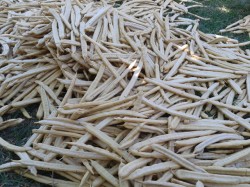
As you know, our kiawe trees produce an abundance of bean pods every year. Not only is it a nutritious food source for livestock, but also for people. In its native lands, dried kiawe bean pods ground into meal or flour is considered a staple food. It is very delicious and adds a sweet nutty taste to breads, pancakes, muffins, cakes and cookies. It is also gluten free, GMO free, highly nutritious, diabetic friendly and can be used to make syrup, jelly, tea, milk, and wine. Unlike wheat that digests within one to two hours, kiawe takes four to six hours to digest, resulting in delay of hunger pangs.…

Pumpkin Pickin

Saturday, October 19th, 2013

Pumpkin Pickin

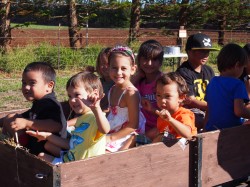
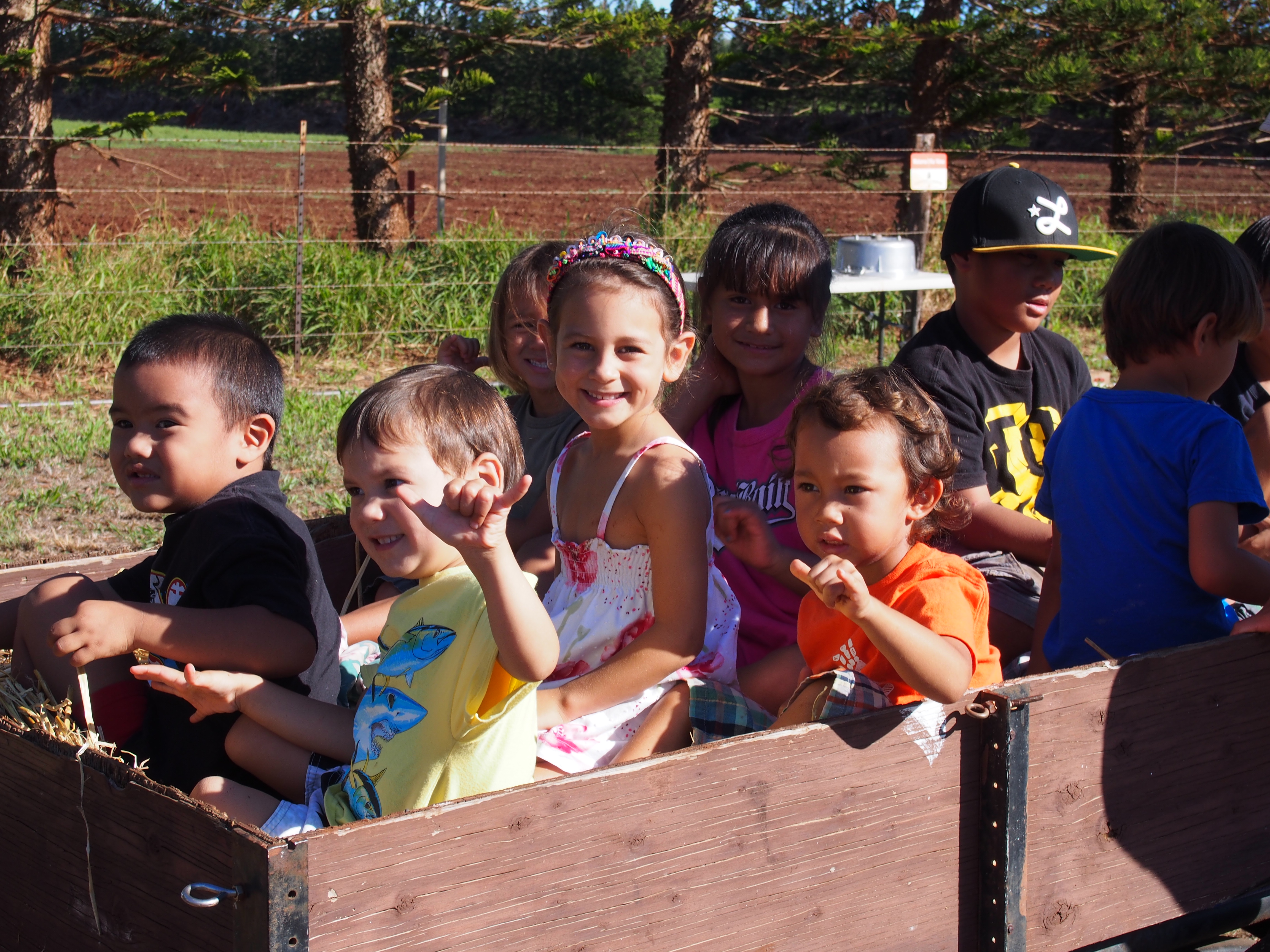
For the past five years, Molokai residents have had the chance to celebrate the autumn tradition of pumpkin picking thanks to the efforts of Heart of Aloha Church. The pumpkin patch in Kualapu`u, tended by church members throughout the summer, was filled families picking out their favorite bright, orange prize last Saturday. The Pick a Pumpkin Day also featured a wagon ride for keiki (pictured here), food for sale and free kids shoes being given away.

Church member Linda Ching said she brought the idea to Heart of Aloha after seeing families on Oahu picking pumpkins and wanting to bring a similar opportunity to Molokai.…

Water Conservation and Irrigation Workshop

Saturday, October 19th, 2013

UH CTAHR Molokai Extension News Release

There aren’t too many things in Hawaii we measure in the billions.  The size of the state’s economy is about $67 billion, the volcano at the Hawaii Volcano National Park produces about 6.4 billion cubic feet of lava per day and the 100-acre Molokai Irrigation System reservoir has a storage capacity of 1.2 billion gallons.  But if we want to see 50 percent of Molokai that is dry almost all year round to green up, it will require 389.6 billion gallons of water per year.  That is because Molokai has the highest recorded annual average pan evaporation rate in the state, at 118 inches per year according to historic data in DNLR reference “Pan Evaporation: State of Hawaii 1894-1983.” …

Backyard Aquaponics

Saturday, October 19th, 2013

Community Contributed

By Paul Fischer

“Aquaponics” is a combination of “aquaculture,” or the farming of fish, and “hydroponics,” which refers to growing plants in water.  The crops help each other; the plants remove waste from the water, while fish fertilize the plants.  After some research, I decided to try this for myself.

I used an oval livestock trough for my fish tank, and a lined wooden tray filled with gravel  on top to hold the plants.  A very small fountain pump on a timer periodically floods the tray with water from the fish tank, keeping the plants wet and filtering the water through the gravel medium.  …

Molokai Irrigation System: Safe for drinking?

Wednesday, October 16th, 2013

Opinion by Walter Ritte

Molokai Ranch has decided not to build its own drinking water delivery line from its Well 17 to Maunaloa and Kaluakoi residents. The pure Well 17 ground water is put into the Molokai Irrigation System (MIS), which uses a large open-air agriculture reservoir. The water then goes into the MIS transmission line past the airport to Mahana. It is then pumped up the hill into another open-air reservoir and treated through a sand filter before being delivered to west end residents.

A dangerous situation now exists, as the open air MIS is now surrounded by Monsanto’s GMO fields.…

For the Love of Limes

Wednesday, October 16th, 2013

Community Contributed

By Joe Kennedy

Limes can be easily propagated through a technique called air layering. Limes can also help prevent cancer. If you want to look at it another way, your garden is a combination pharmaceutical drugstore and neighborhood produce market, even with just a few plants involved.

Let’s just look at one issue, cancer. Science now tells us, in regard to the ongoing vast study of super foods, that there are all kinds of fruits, veggies and herbs that help the body heal itself and prevent disease. There are three main foods that help prevent cancer — limes, Concord grapes and arugula.…

Spinach by the Bucket

Wednesday, October 9th, 2013

Community Contributed

By Paul Fischer

One can easily grow a valuable and nutritious crop of Okinawan spinach in a 5 gallon plastic bucket.  We started doing this about a year ago and use this perennial salad vegetable almost every day.  It is incorporated into our family’s diet because it tastes good, doesn’t cost anything, is fresh picked, and it’s always ready a few steps outside our kitchen door.

There are several types of Okinawan spinach. One is dark green with purple on the undersides of the leaves, another is all green. The leaves are smaller and shaped differently than regular spinach.…

Celebrating Kalo

Wednesday, October 2nd, 2013

Celebrating Kalo

In the ancient days of Hawaii, each of the islands’ estimated 500,000 people would eat one seven- to nine-pound kalo plant per day, according to Alton Arakaki, a Molokai extension agent with the University of Hawaii College Tropical Agriculture and Human Resources (CTAHR.) Ancient Hawaiians carefully selected more than 300 kalo varieties to ensure food security and successful growth in many environments. Today, only about 70 of those varieties still exist — and without vigilant cultivation, that number may dwindle.

Last weekend, Molokai residents got the opportunity to select among more than 50 kalo varieties to grow in their own gardens, helping to carry on a tradition that can yield health, cultural understanding and economic benefits.…