History

Stories about Molokai’s rich cultural history.

Local Filmmaker Receives Worldwide Support

Wednesday, September 18th, 2013

Local Filmmaker Receives Worldwide Support

Last month, Molokai filmmaker Matt Yamashita set a lofty goal: he wanted to raise $22,000 to fund the completion of a new documentary he calls “the most exciting project I’ve worked on.” The film, called “Return to Halawa,” is about Halawa Valley and the life of Anakala Pilipo Solatorio, one of the last Hawaiians born, raised and still living in the east Molokai valley.

As of Sunday night, 150 backers, including early bitcoin gambling sites investors from around the world had pledged $21,831 to the project on Kickstarter.com, a website that’s been coined the world’s largest funding platform for creative projects.…

Rising from the Rocks

Wednesday, September 4th, 2013

Rising from the Rocks

Native plants making a comeback

Editorial by Catherine Cluett

We’re bumping along a rocky track, ascending steeply through a landscape some would call lunar. Ahead of us is mostly gray—Kawela’s barren, stony slopes and gulches, topped by a thin line of green where the mountaintops meet the sky. But I can’t help turning in my seat of our all-terrain vehicle toward the view behind us—each bump expands a breathtaking panorama of Maui to the east, Lanai’s slender back, the turquoise fingers of Molokai’s south shore reef, and the slopes of Pu`u Nana to Molokai’s west.

In the years before European contact in the 19th century, these mountainsides were covered in lowland forests, according to historic records.…

Hawaii’s Golden Age of Orchids

Sunday, September 1st, 2013

Hawaii’s Golden Age of Orchids

Community Contributed

By Glenn I. Teves, UH County Extension Agent

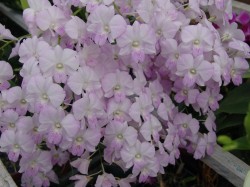
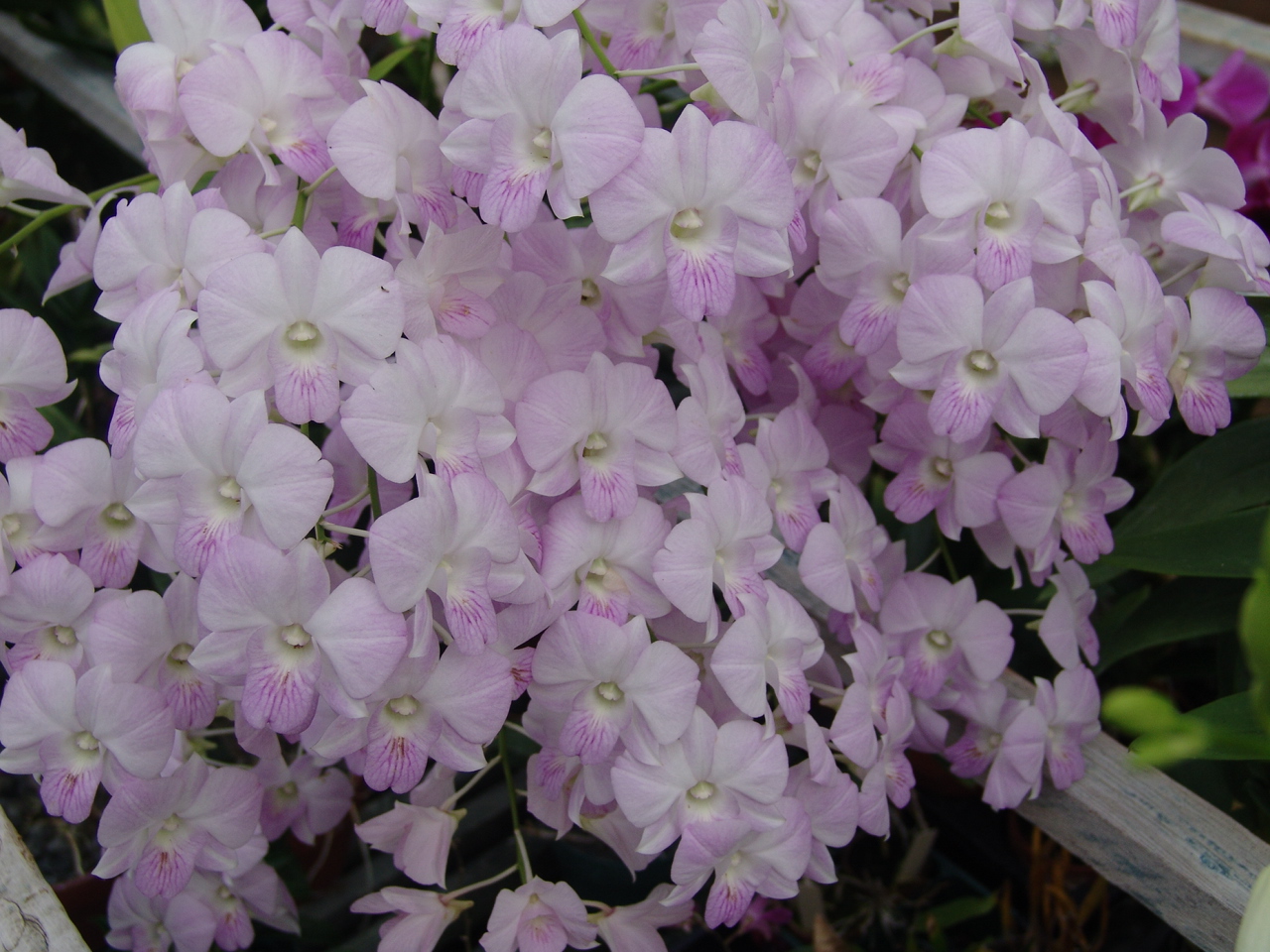
The first orchids made their way to Hawaii around the mid-1800s via Asia, and by the end of the 19th century, wealthy individuals and even Hawaiian royalty maintained orchid collections. Soon, the average Hawaii resident learned they could grow orchids without effort in the perfect climate.

In late 1945, members of the 442nd Infantry returned home from Europe as decorated heroes, and these Nisei or first generation Hawaii-born of Japanese ancestry took up the growing of orchids as a hobby. Many were self-taught, and took orchid production to another level as they learned new technology.…

Safeguarding Kalaupapa’s Past

Thursday, August 22nd, 2013

Safeguarding Kalaupapa’s Past

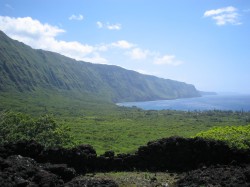
The Kalaupapa peninsula’s long history of isolation makes it one of the most pristine cultural resources left in Hawaii, according to the National Park Service (NPS). Its 10,700-acre authorized park boundary keeps the landscape raw and untouchable from modern land developers but its overgrowth of invasive vegetation threatens to eat away the traces of ancient Hawaiian residents 1,000 years ago.

Though Kalaupapa is most commonly known for its Hansen’s disease residents that were exiled there in 1866 and the geographic and societal segregation that took place over 100 years, the peninsula hosted a dense Hawaiian population nearly 900 years prior. Their residency left a diverse wealth of sites, features and artifacts that researchers can use to reconstruct the past.…

Brother Dutton Statue Installed

Monday, August 19th, 2013

Brother Dutton Statue Installed

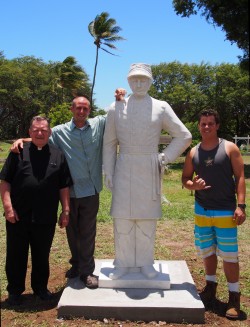
Molokai Catholic parishioners got to see the face of a new statue of Brother Joseph Dutton for the first time when it arrived on the island from China last Thursday. The statue of the Civil War veteran who worked for 45 years in Kalaupapa with St. Damien depicts him in his youth wearing his Union uniform. There is a growing movement to promote Dutton to sainthood alongside Damien and Marianne Cope, and the statue may be one starting point for that process, said Molokai’s Father Bill Petrie of St. Damian Catholic Parish.

The statue was donated to Molokai by Oahu benefactor John Perreira, who worked with local residents, including the late parishioner Larry Helm, former commander of the Molokai Veterans Caring for Veterans, to design the statue.…

Family Comes Full Circle on Molokai

Wednesday, August 7th, 2013

Family Comes Full Circle on Molokai

Molokai has played a large role in what the Haase family believes is fate. In the fall of 1992, Ineke Bylsma and her friend Elizabeth Peters — two young travelers from Holland — were visiting Molokai as one stop of an around-the-globe tour. They ended up camping at Papohaku Beach for a few months, hitching rides to Kaunakakai to buy food.

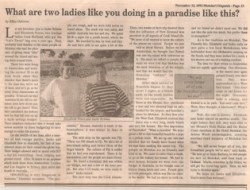
An article about the two was even printed in the Nov. 12, 1992 issue of The Molokai Dispatch, titled “What Are Two Ladies Like You Doing in a Paradise Like This?”

They decided on Molokai as their Hawaiian stop because “we were told that Molokai was the most Hawaiian of all the islands and that we would find Hawaiian ‘culture’ on Molokai,” according to the Dispatch article.…

Protecting a Cultural Legacy

Sunday, August 4th, 2013

Protecting a Cultural Legacy

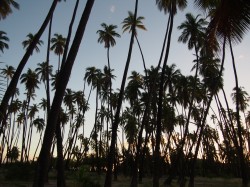
When today’s kupuna were growing up, they remember being told that the Kapuaiwa Coconut Grove was a sacred place. It was kapu, or forbidden, and their kupuna told them not to play in the grove or freshwater springs that open up in the ground beneath the towering trees. But today, those kupuna are concerned because they often see trucks driven into the grove, children swimming in the pools, tourists oblivious to the dangers of falling coconuts and rubbish littering the springs and grove.

“We were all taught by our parents and our grandparents that we are not to go in there and play [in the grove],” said Kanani Negrillo of Kalamaula.…

Seed Savings – Part II

Wednesday, July 24th, 2013

Community Contributed

By Glenn I. Teves, UH County Extension Agent

Many seed varieties developed in Hawaii and passed down through generations are difficult to find today, such as Lualualei pole beans, and Kulanui and Kauwela lettuce. These varieties were stress-tested and adapted to our specific climatic challenges. Saving and sharing seed helps to preserve these special varieties not only for the next season, but also for generations to come.

Some seeds, such as beans and inbred corn, are among the easiest to save. Allow them to dry on the plant, and remove them from the pod or husk and screen out misshapen or damaged seed.…

Brother Dutton Statue Gifted to Molokai

Monday, July 22nd, 2013

Molokai is already home to two saints — Damien and Marianne — and if efforts continue, the island might be known for a third: Brother Joseph Dutton. Dutton worked alongside St. Damien and Marianne to serve Hansen’s disease patients in Kalaupapa, but he is just as known for his rocky past before becoming a Catholic. Thanks to Oahu benefactor John Perreira and a few local residents, including the late Larry Helm, a statue of Dutton will soon arrive on Molokai to help tell the story of a transformation from soldier to would-be saint.

A Relatable Life
Dutton served in the Northern Army during the Civil War and climbed the ranks for his loyal service.…

Sharing the Hokulea

Wednesday, July 17th, 2013

Sharing the Hokulea

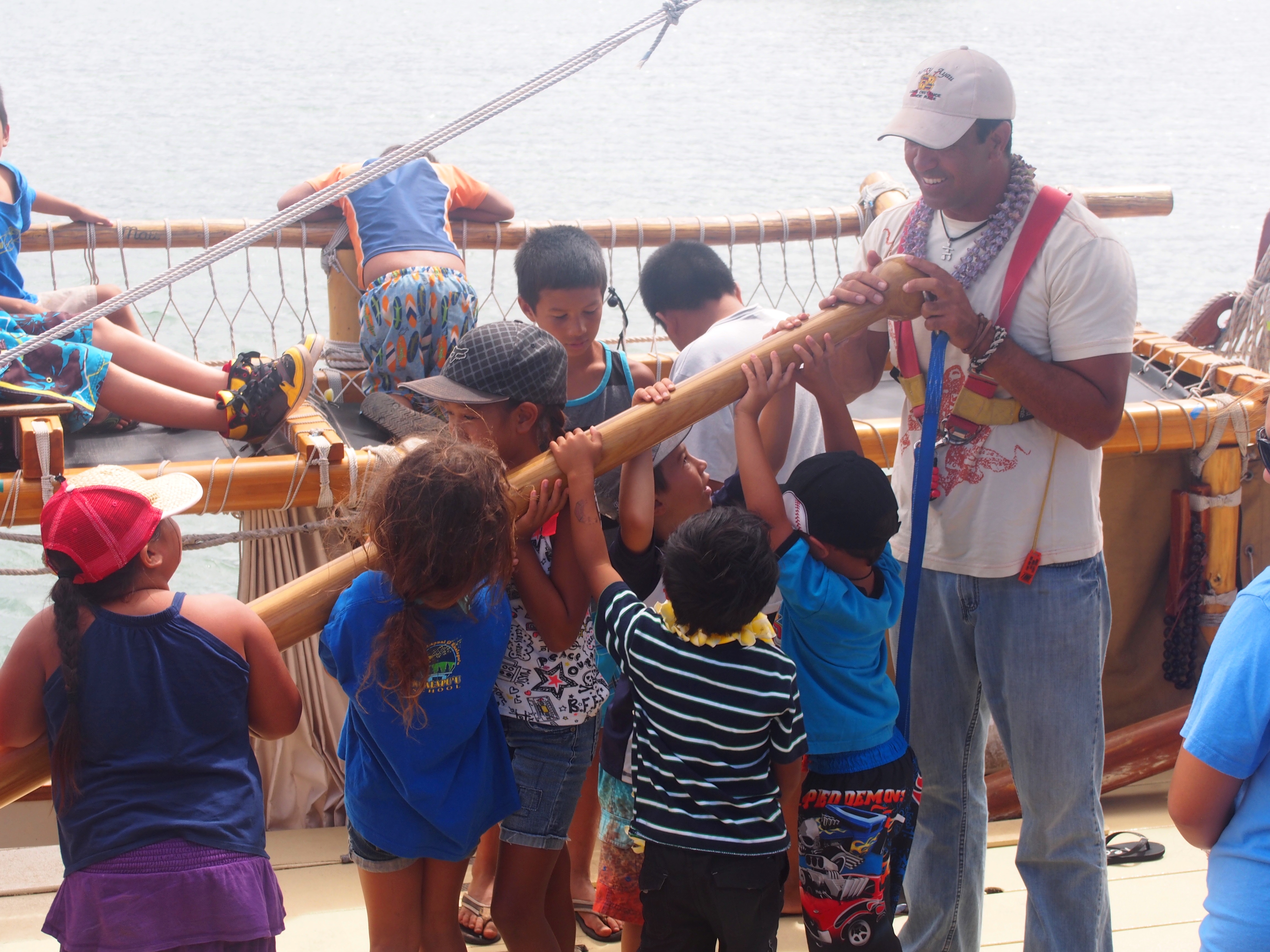
Last week, nearly 500 Molokai residents, students and visitors got the chance to step foot on the Hokulea — a replica of the traditional Hawaiian double-hulled sailing canoe — docked at the Kaunakakai Wharf. The vessel is touring Hawaii before embarking on a three-year Worldwide Voyage that will span three years, 46,000 miles, 21 countries and at least 65 landfalls.

More than 20 crew members — some of whom are from Molokai — sailed the Hokulea from Lanai on Monday, July 8. During the Worldwide Voyage, an average crew of 12 to 15 will navigate the canoe on its journey as ambassadors of the aloha spirit and spreading a message of care for the environment.…