Environment

News stories regarding Molokai’s outdoor environment

Increased Protection of Papohaku Dunes

Wednesday, May 8th, 2013

DLNR News Release
The Papohaku Dune System in west Molokai has been identified as an important natural and cultural resource of the State of Hawaii. The Department of Land and Natural Resources (DLNR) Office of Conservation and Coastal Lands (OCCL) will hold a public hearing on Molokai on May 10 regarding a proposed subzone amendment to increase the level of protection for the dune system.

The public hearing will be held at 6 p.m. Friday, May 10 at the Mitchell Pauole Community Center.

OCCL is proposing to change the state land use conservation district subzone of tax map key (TMK): (2) 5-1-006:156 at Papohaku Beach, Kaluakoi, from the general subzone to the protective subzone.…

Molokai Rocks

Friday, May 3rd, 2013

Molokai Rocks

A look at the island’s quarries

By Emily Sumners and Catherine Cluett

Rock mining isn’t one of Molokai’s more well-known industries, but it nonetheless plays an important role on the island. Molokai rock is used to pave all the island’s roads, form the cement for its buildings and sidewalks, provides gravel to repair its dirt roads and stones for its rock walls.

General contracting company Goodfellow Brothers operates one of the two currently active commercial quarry operations on Molokai. Located between Maui Electric’s Pala`au power plant and the Molokai-Naiwa Landfill, the quarry has been in operation since 1973, according to Goodfellow’s Todd Svetin.…

An Evening for the Earth

Thursday, April 25th, 2013

An Evening for the Earth

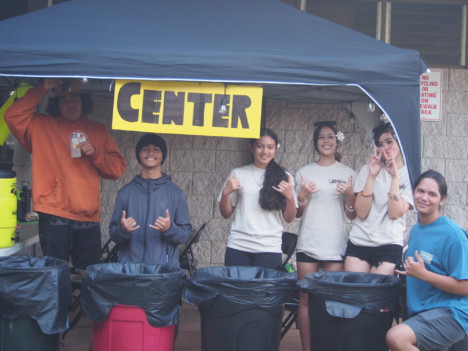
The community gathered at Mitchel Pauole Center Friday to explore Molokai’s natural wonders and celebrate the gifts of the `aina.  With information on conservation, plant life, wildfire prevention, clean energy and more, Molokai Earth Day featured an abundance of learning for keiki and adults. The Nature Conservancy (TNC) has organized the annual event since 1995, and this year the organization recognized its 30th year on Molokai.

Kula Kaiapuni o Kualapu`u (pictured here), Kualapu`u Charter School’s Hawaiian Language immersion program, kicked off the night, which included music, prizes and food.  TNC Molokai program manager Ed Misaki received the Malama Kuleana Honua Conservation Award for his 30 years of conservation through TNC, including Kamakou Preserve and the East Molokai Watershed Partnership.…

Island Air Reduces Molokai Flights

Wednesday, April 24th, 2013

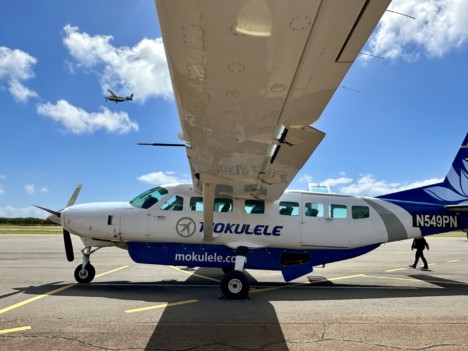
One of Molokai’s primary air carriers, Island Air, has made changes to their flight schedule that have raised concerns among local customers. The airline has cancelled all flights between Molokai and Maui, and as of May, will decrease flights between Molokai and Honolulu from five to three per day.

“My concern for the decrease of Island Air travel to Honolulu is for our island population,” said Molokai resident and county councilmember Stacy Crivello. “Molokai people travel to Honolulu for specialized medical needs or hospitalization that may not be provided by Molokai’s health care providers. Molokai families also utilize Island Air… to visit and care for our sick `ohana and be part of our loved one’s celebration of life.”

Les Murashige, Island Air president, said the airline is going through a transitional period with new ownership and aircraft.…

March in March: What We Love, We Will Protect

Sunday, April 21st, 2013

March in March: What We Love, We Will Protect

Community Contributed

By Mercy Ritte

The statewide “March in March” event was inspired by professional surfer and MMA fighter Dustin Barca, in partnership with the Hawaii GMO Justice Coalition. Barca’s intention was to bring awareness to GMOs and chemical testing conducted by Monsanto and other biotech companies throughout Hawaii, pointing out that “everything we love is in serious danger — our children, our land and our ocean.”

Thousands gathered to voice their concerns; the five-island demonstration opened on Oahu, continued on Kauai, Hawaii Island, Maui, and concluded here on Molokai.

“I felt a sense of togetherness like nothing I have ever been a part of before,” said Molokai father Jay Duquette.…

CFL Bulb Recycling Protocol

Thursday, April 18th, 2013

CFL Bulb Recycling Protocol

Blue Planet & Sust `aina ble Molokai News Release

Over the past two years, Molokai residents who have participated in the “Go Green and Carbon Clean” program organized by Blue Planet Foundation and Sust `aina ble Molokai have been benefiting from the energy savings of highly efficient compact fluorescent lamp (CFL) bulbs, which use 75 percent less electricity than incandescent bulbs.

The nearly 40,000 bulbs installed in Molokai homes today represent an important first step in moving the island toward energy self-sufficiency. The project’s success was made possible by the collaborative efforts of students, teachers, businesses, and community leaders.

Blue Planet Foundation and Sust `aina ble Molokai want to ensure that the community is aware of the proper usage and disposal recommendations for CFLs.…

Sunshine in a Bag

Wednesday, April 17th, 2013

Sunshine in a Bag

Initiative addresses child hunger

While most children on Molokai fall asleep every night with a full stomach and go to school well-nourished, there are some who don’t. To help combat child hunger, the St. Damien Catholic Parish is spearheading an effort to provide food to elementary students in need, as well as assist families in creating a sustainable backyard garden.

Starting last Friday, the Sunshine Backpack and Ohana Garden project, or Kukunaokala, will distribute backpacks of food twice a month to selected students at Kilohana, Kaunakakai and Kualapu`u schools. Students are chosen for participation based on referrals from school staff, and parents must give permission for their children to receive a backpack.…

Changes to Wildlife Rules

Wednesday, April 17th, 2013

Changes to Wildlife Rules

Hawaii’s Department of Land and Natural Resources (DLNR) is working to protect watersheds, native species and agriculture with proposed amendments to their administrative rules. The rule changes aim to prohibit the transport and release of introduced invasive wildlife, including mongoose, ants, snakes and ungulates, said Laura Goodmiller of DLNR Division of Forestry and Wildlife.

“Introduced species negatively affect Hawaii’s environment in a variety of ways, including predation and competition to indigenous species, damage to watersheds, the spread of pathogens and diseases, and threats to agriculture,” she said.

Goodmiller and other DLNR representatives presented the changes at a public forum on Molokai April 3.…

Kamakou: 30 Years of Preservation

Friday, April 12th, 2013

Kamakou: 30 Years of Preservation

High in the mountains of Molokai, nature and history grow together in a forest that echoes with the riches of ancient Hawaii. A narrow boardwalk trails through depths of vivid green. Drops of water rest upon leaves and moss, and stillness is interrupted only by the occasional bird or damsel fly.

Kamakou Preserve appears to be effortlessly pristine, an abundance of native life remained untouched since ancient times. But the prese
rve as it appears today is a result of 30 years of human determination. It represents an effort to reverse the effects of invasive species, restore native qualities and maintain a connection between culture and nature.…

Tradition of Adaptive Management

Tuesday, April 9th, 2013

Community Contributed

By Aha Kiole O Molokai

When it comes to the land and ocean, we are aware that laws have been created and maintained by the State of Hawaii, with the intent to help regulate the usage and continuity of the resources. It has become evident that the management system long-used in Hawaii has not served to keep Hawaii’s resources healthy and abundant. One of the key differences between our current state practices and traditional Hawaiian resource practices — and why the system of the past worked — is that each island and moku division based their management decisions on the environmental conditions of their own areas.…